

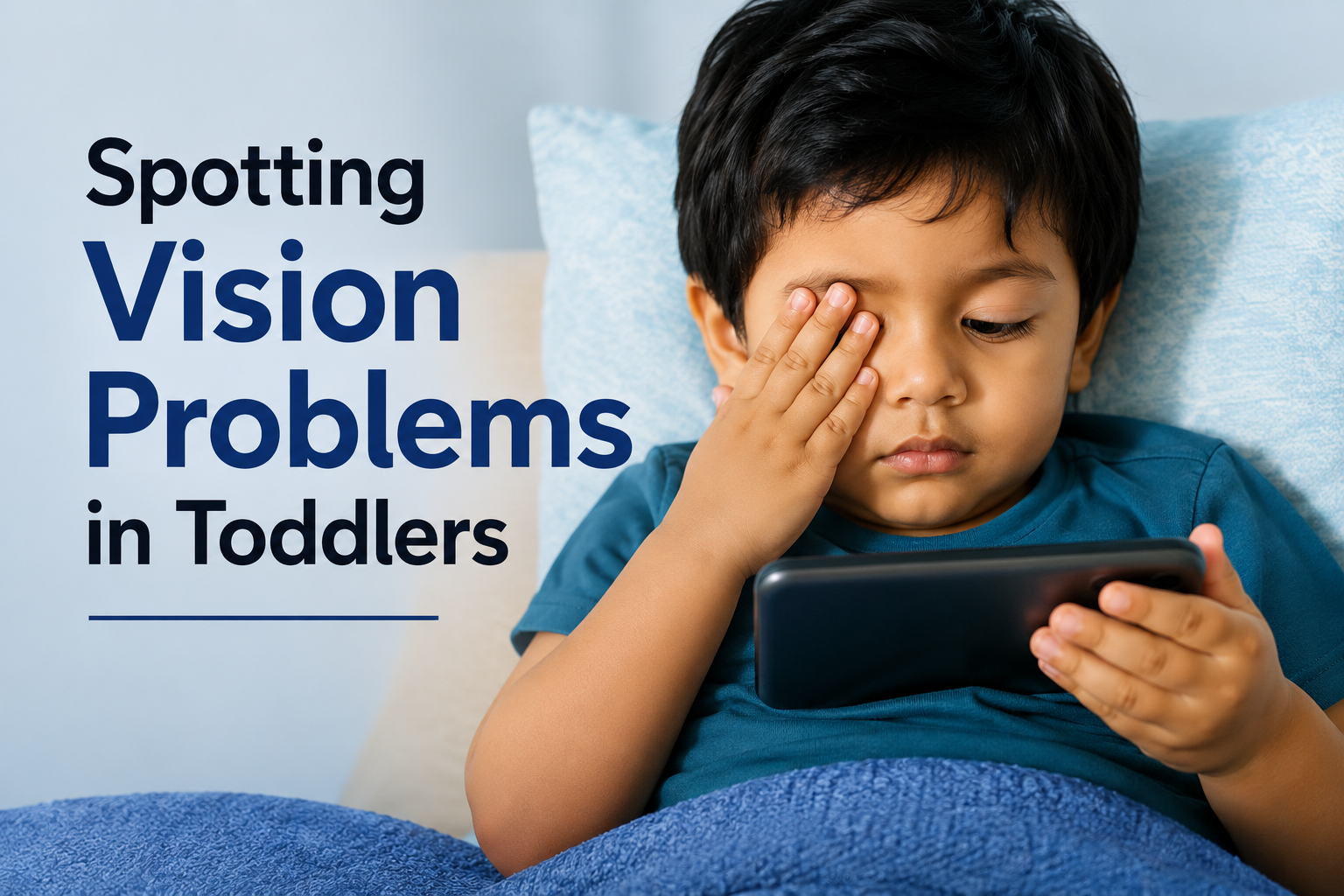
Little eyes may not have the words to explain what they see, but their everyday behaviour can tell you a lot. Toddlers who cannot clearly describe what they see may show subtle behavioural changes when they experience vision problems in toddlers. Squinting, excessive blinking, rubbing the eyes, sitting unusually close to objects, or avoiding activities that require visual focus can all be potential warning signs. Parents should pay attention to these changes rather than assuming they are simply habits.
Signs Parents Should Watch For
Some vision problems in toddlers may be difficult to recognise because young children often adapt to reduced vision. Parents should watch for:
- Frequent squinting or blinking
- Persistent eye rubbing
- One eye frequently turning inward or outward
- Holding books or toys unusually close
- Difficulty following moving objects
- Bumping into objects more often than expected
- Excessive sensitivity to light
If these behaviours occur repeatedly, a professional examination can help identify the underlying concern.
Why Early Eye Checkups Matter
A pediatric eye checkup in Vadodara can assess visual acuity, eye alignment, focusing ability, and overall eye health even when a toddler cannot describe symptoms. Early examinations can help detect vision problems in toddlers before they interfere with visual development.
Parents should also consider an examination if there is a family history of childhood eye conditions or if one eye appears to behave differently from the other.
Myopia Progression in Children
Myopia progression in children can begin at a young age, although many toddlers cannot communicate that distant objects appear unclear. Parents may notice children moving closer to screens, toys, or books to see them more clearly. A best child eye specialist in Vadodara can assess refractive errors and recommend appropriate monitoring when needed.
When Should Parents Consult a Specialist?
Persistent signs of vision problems in toddlers should be evaluated rather than monitored indefinitely at home. A best child eye specialist in Vadodara can perform age-appropriate assessments and identify conditions that may require treatment or regular monitoring.
A pediatric eye checkup in Vadodara is particularly important if a child has frequent squinting, abnormal eye movements, difficulty tracking objects, or an eye that consistently turns. Detecting vision problems in toddlers early can support healthier visual development and improve treatment opportunities.
Supporting Healthy Vision at Home
Parents can support children’s eye health by providing adequate lighting, encouraging outdoor play, limiting prolonged close-up screen use, and scheduling recommended eye examinations. If you notice continuing vision problems in toddlers, avoid relying solely on behavioural observation. Professional assessment provides a clearer understanding of what may be happening.
Regular visits with a best child eye specialist in Vadodara and timely pediatric eye checkup in Vadodara appointments can help monitor changes as your child’s vision develops.
Conclusion
Recognising vision problems in toddlers can be challenging when children cannot explain what they are experiencing. Paying attention to behaviour and arranging timely professional examinations can help detect concerns early. If you are looking for the best child eye specialist in Vadodara or need a pediatric eye checkup in Vadodara, Desai Eye Hospitals provides specialised pediatric eye care, age-appropriate evaluations, and personalised guidance to support your child’s developing vision. Noticing unusual eye behaviour in your toddler? Contact us today to schedule a pediatric eye checkup and get expert guidance for your child’s developing vision.