

Clear vision is essential at every age, and timely cataract care can make a meaningful difference.
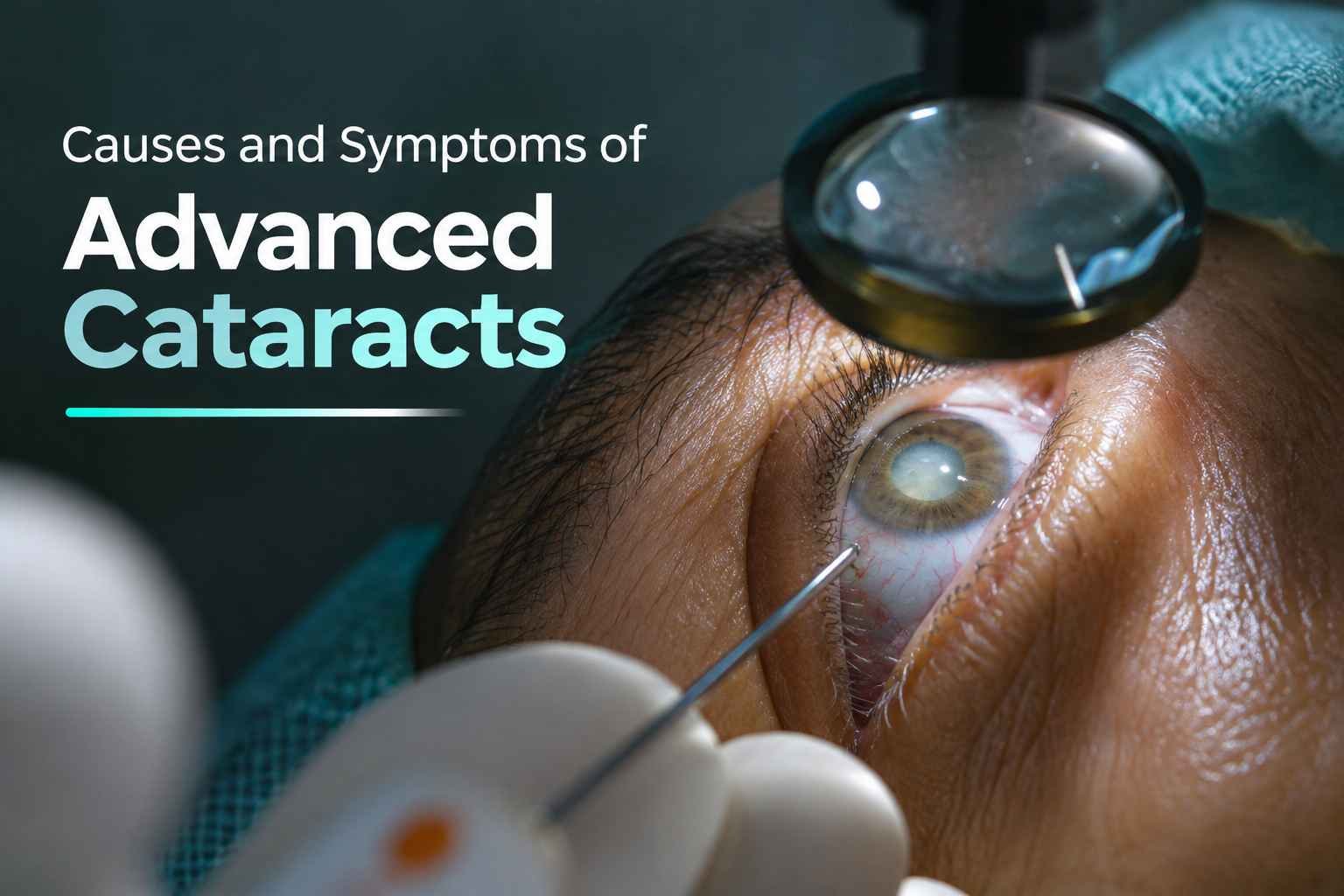
A cataract develops when the natural lens of the eye becomes cloudy, gradually affecting vision. When the cataract progresses significantly and the lens becomes densely opaque, it is known as a mature cataract. At this stage, everyday activities such as reading, recognising faces, and walking safely may become difficult. Unlike an early cataract, a mature cataract often requires more detailed evaluation and special surgery planning to ensure the procedure is appropriate for the patient’s eye condition.
What Is a Mature Cataract?
A mature cataract occurs when the natural lens becomes completely or almost completely opaque, significantly reducing the amount of light reaching the retina. Vision may become severely blurred, and in some cases, a person may only be able to distinguish light from darkness.
Common symptoms include:
- Severe or persistent blurred vision.
- Difficulty recognising faces and reading.
- Increased sensitivity to bright lights.
- Poor vision in dimly lit surroundings.
- Difficulty performing daily activities independently.
An examination at an eye care hospital in Vadodara can help determine the cataract’s stage and whether surgery is required.
Why Does a Mature Cataract Require Special Surgical Planning?
As a cataract becomes denser, the lens can become harder and more difficult to remove. This may increase the complexity of surgery and require additional precautions.
Special surgery planning is important for several reasons:
- Increased lens density: A hardened lens may require greater surgical energy or a modified removal technique.
- Reduced visibility: A very cloudy lens can make it difficult for the surgeon to view internal eye structures.
- Potential complications: Advanced cataracts may be associated with a higher risk of surgical complications, including damage to the supporting structures of the lens.
- Additional eye conditions: Some patients may also have glaucoma, corneal problems or retinal disease that influence the surgical approach.
A detailed assessment at an eye care hospital in Vadodara helps the surgeon identify these concerns before the procedure.
What Happens During Pre-Surgical Evaluation?
Before cataract surgery, the ophthalmologist examines the eye and evaluates the patient’s overall health. This assessment supports special surgery planning and helps determine the safest approach.
It may include:
- Measuring the eye to calculate the appropriate artificial lens power.
- Checking corneal health and thickness.
- Measuring intraocular pressure.
- Examining the retina, where possible.
- Using an ultrasound scan if the dense cataract prevents a clear view of the back of the eye.
Patients may also need to discuss their medications, existing medical conditions and previous eye procedures.
How Is Mature Cataract Surgery Performed?
Phacoemulsification is a commonly used cataract surgery technique. It uses ultrasound energy to break the cloudy lens into smaller pieces before removal and replacement with an artificial intraocular lens.
However, very dense or advanced cataracts may require adjustments to the surgical technique. The surgeon may consider alternative approaches depending on lens hardness, corneal health and other clinical findings.
Access to advanced eye surgery in Vadodara allows patients to discuss suitable surgical techniques and understand the benefits and limitations of each approach. Careful special surgery planning also helps prepare for possible complications and individual surgical requirements.
Recovery and Care After Surgery
Recovery varies depending on the complexity of the procedure and the patient’s eye health. Following surgery, patients are generally advised to:
- Use prescribed eye drops as directed.
- Avoid rubbing or pressing the operated eye.
- Protect the eye from dust and accidental injury.
- Attend all scheduled follow-up appointments.
- Avoid strenuous activities until the surgeon provides clearance.
An eye care hospital in Vadodara can provide follow-up assessments to monitor healing and identify complications early. Patients should seek prompt medical attention if they experience sudden vision loss, severe pain, increasing redness or unusual discharge.
Supporting Healthy Vision as You Age
Regular eye examinations become increasingly important with age. Following practical eye health tips for seniors, such as attending routine check-ups, managing diabetes and protecting the eyes from injury, can support long-term visual health.
At Desai Eye Hospitals, patients can seek professional guidance for cataract evaluation and advanced eye surgery in Vadodara. If you are experiencing significant vision changes, consult an ophthalmologist to understand whether surgery is appropriate. Contact us to schedule an examination and discuss special surgery planning for your cataract condition. A trusted eye care hospital in Vadodara can help you understand the next steps towards better vision.