

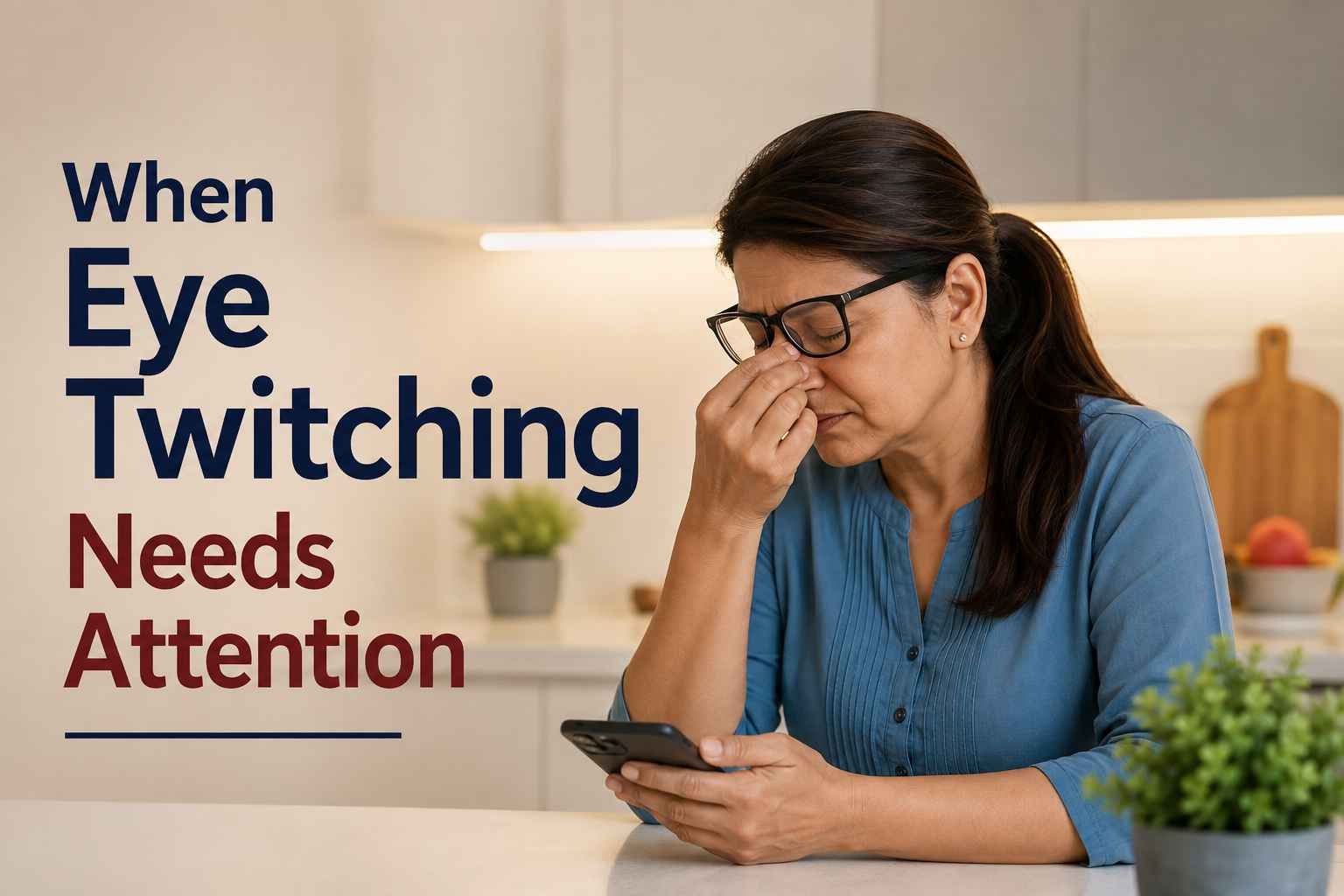
A tiny twitch can catch your attention, but understanding why it happens can help you know when your eyes need expert care. Eyelid spasms and twitching are common involuntary movements that usually affect the eyelid for a short period. Stress, tiredness, excess caffeine, eye strain, and inadequate sleep are frequent triggers. In many cases, the twitch settles on its own once the underlying trigger is addressed.
Common Triggers Behind Eyelid Twitching
Several everyday factors can contribute to eyelid spasms and twitching, particularly when the eyes are tired or irritated. Spending long hours looking at screens may increase eye strain, while stress and lack of sleep can make twitching more noticeable.
Staying hydrated, getting adequate rest, taking regular screen breaks, and reducing excessive caffeine may help when these are contributing factors.
Sweat Rash on Eyelids
A sweat rash on eyelids can cause itching and irritation, which may lead to frequent rubbing or blinking. While the rash itself does not necessarily cause persistent twitching, irritation around the eyelids can make spasms more noticeable. If the irritation continues, an eye specialist can help determine the appropriate treatment.
When Should You Be Concerned?
Most eyelid spasms and twitching are temporary. However, you should consider professional evaluation if the twitching persists for an extended period, becomes frequent, or affects your ability to keep the eye open.
Seek an eye examination if you also experience:
- Significant eye pain or redness
- Swelling around the eye
- Changes in vision
- Drooping of the eyelid
- Twitching involving other areas of the face
- Persistent spasms that interfere with daily activities
These symptoms may indicate an underlying eye or neurological condition requiring further assessment.
Can Eye Strain Trigger Twitching?
Long periods of close-up work and digital screen use can contribute to eyelid spasms and twitching by increasing eye fatigue and discomfort. If symptoms continue despite adequate rest and screen breaks, a professional examination can help identify whether another eye condition is involved.
Choosing the best eye treatment in Vadodara can provide access to appropriate evaluation and personalised recommendations based on your symptoms.
When to See an Eye Specialist
If eyelid spasms and twitching continue despite lifestyle changes, do not ignore them. An examination at a best eye hospital in Vadodara can help determine whether dry eyes, irritation, refractive errors, medication effects, or another condition could be contributing.
The best eye treatment in Vadodara depends on the underlying cause, so treatment should be based on a proper eye examination rather than self-diagnosis.
How to Reduce Occasional Twitching
For occasional eyelid spasms and twitching, simple lifestyle adjustments may help. Prioritise sufficient sleep, manage stress, limit excessive caffeine, take breaks from screens, and avoid rubbing your eyes. If symptoms persist, a consultation with an eye specialist can provide clarity.
A trusted best eye hospital in Vadodara can also evaluate persistent symptoms and recommend appropriate care.
Conclusion
Although eyelid spasms and twitching are often harmless and temporary, persistent or unusual symptoms should be professionally evaluated. Understanding potential triggers and recognising warning signs can help you decide when to seek care. Desai Eye Hospitals provides the best eye treatment in Vadodara with comprehensive diagnostic support at a trusted best eye hospital in Vadodara, helping patients receive appropriate care based on their individual eye health needs. Experiencing persistent eyelid twitching or unusual eye symptoms? Contact Desai Eye Hospitals today to schedule a comprehensive eye examination and get expert guidance for your eye health.