

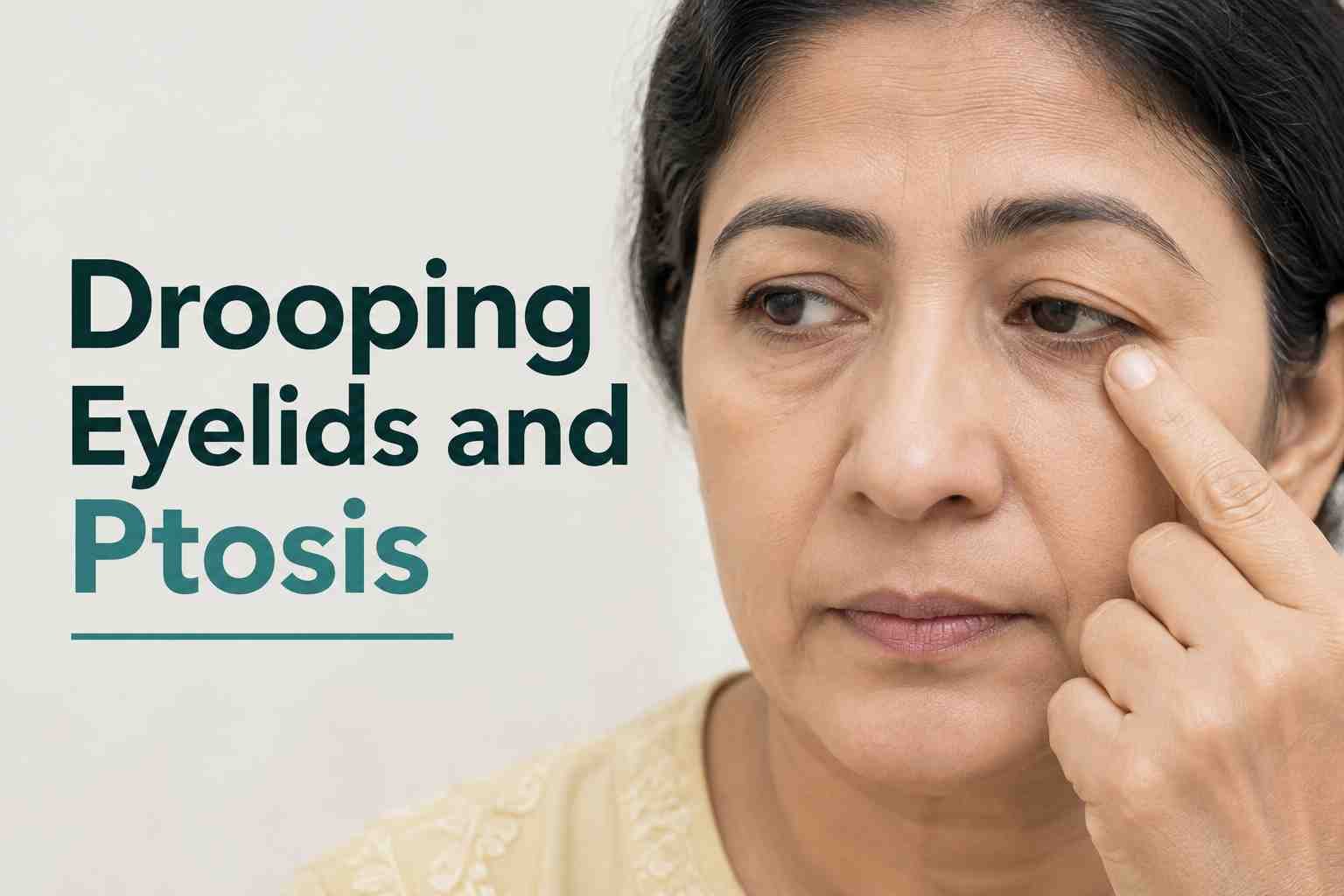
When your eyelids change, your vision may be telling you to look a little closer. Drooping eyelids can sometimes appear as a gradual change with age, but they are not always simply a cosmetic concern. In some cases, the eyelid may become low enough to interfere with the upper part of the visual field. Understanding why drooping eyelids occur can help you recognise when an assessment by an eye specialist may be appropriate.
What Are Drooping Eyelids?
Drooping eyelids, medically known as ptosis, occur when one or both upper eyelids sit lower than they normally should. The amount of drooping can vary considerably from person to person.
Some individuals may have a slightly lower eyelid that has been present for many years, while others may develop noticeable changes later in life. In more pronounced cases, drooping eyelids can partially cover the pupil and interfere with vision.
Ptosis can affect one eye or both eyes, and the underlying cause can differ depending on a person’s age, medical history and the way the condition developed.
Is Ageing Always the Cause?
Ageing is one possible reason for drooping eyelids, particularly when the tissues supporting the eyelid gradually stretch or weaken. The muscle responsible for lifting the upper eyelid can also become less effective over time.
However, age is not the only explanation.
Ptosis may also be associated with problems involving the eyelid muscles, nerves or surrounding tissues. Previous eye surgery or injury can sometimes contribute as well.
When drooping eyelids develop suddenly or noticeably worsen over a short period, an eye examination is particularly important because the change may require further investigation.
How Can Ptosis Affect Your Vision?
Mild ptosis may have little effect on everyday activities. More significant drooping eyelids, however, can obstruct part of the upper visual field.
Some people unconsciously compensate by raising their eyebrows, tilting their head backwards, or repeatedly lifting their eyelids. These habits may contribute to forehead or facial discomfort.
Children and adults may experience different effects. In children, significant ptosis can interfere with normal visual development. In adults, it may make activities such as reading, driving, or looking upwards more difficult.
A best eye doctor in Vadodara can assess the position of the eyelids and determine whether the condition is affecting your vision.
What Causes Ptosis?
Ptosis can have several possible causes. Identifying the cause is important because treatment depends on what is responsible for the eyelid position.
Possible causes include:
- Age-related weakening or stretching of eyelid-supporting tissues
- Problems involving the eyelid-lifting muscle
- Nerve-related conditions
- Eye or eyelid injury
- Previous eye surgery
- Conditions affecting muscles or nerves
- Ptosis that has been present since birth
Not every case requires surgery. The appropriate approach depends on the severity, cause, and impact on vision.
Could It Be Related to Eyelid Spasms and Twitching?
Eyelid twitching is different from ptosis, although people may sometimes confuse the two. Eyelid spasms and twitching generally involve involuntary movements of the eyelid, whereas ptosis refers to an abnormal lowering of the upper eyelid.
Occasional twitching is commonly temporary and may be associated with factors such as fatigue or stress. Persistent or unusual eyelid movements should be discussed with an eye specialist, particularly if they occur alongside other changes.
A proper examination can help distinguish between different eyelid conditions rather than assuming that every eyelid change has the same cause.
When Should You See an Eye Specialist?
A gradual change that has remained stable for years may not represent an emergency, but it is still worth discussing with an eye specialist if it begins affecting your vision or daily activities.
You should seek prompt medical assessment if the eyelid suddenly droops, particularly when the change occurs alongside double vision, unequal pupils, significant headache, facial weakness or other neurological symptoms.
Sudden ptosis can sometimes indicate an underlying nerve or neurological problem and should not be dismissed as normal aging.
A modern eye center in Vadodara can provide the appropriate eye examination and determine whether additional evaluation is necessary.
How Is Ptosis Diagnosed?
Diagnosis usually begins with a detailed examination of the eyelids and eyes. The specialist may assess how high the eyelids sit, how well the eyelid muscles function, and whether both eyes are affected equally.
Your medical history is also relevant. The specialist may ask when you first noticed the change, whether it is becoming worse and whether your vision or other eye functions have changed.
Additional tests may be recommended when the examination suggests an underlying nerve, muscle or other medical problem.
If you are searching for the best eye doctor in Vadodara, look for a professional assessment that considers both the appearance of the eyelid and its effect on visual function.
Can Ptosis Be Treated?
Treatment depends on the underlying cause and how severely the eyelid is affecting the person.
In some cases, observation may be appropriate, particularly when the condition is mild and stable. If drooping eyelids significantly interfere with vision or daily activities, surgical correction may be considered.
Ptosis surgery generally aims to raise the upper eyelid to an appropriate position. The specific surgical approach depends on factors such as eyelid muscle function and the severity of the ptosis.
The decision to undergo treatment should be made after a detailed examination and discussion with an eye specialist.
Why Treatment Should Not Be Based on Appearance Alone
Understandably, people may first notice ptosis because of changes in facial appearance. However, the condition deserves attention beyond cosmetic considerations.
When drooping eyelids obstruct the visual field, they can affect reading, driving, working, and other everyday activities. Some people may also develop habits such as lifting their eyebrows or tilting their head to see more clearly.
For this reason, an assessment should consider both the appearance of the eyelids and their functional effect on vision.
A modern eye center in Vadodara can help determine whether treatment is medically appropriate and what options may be available.
Can Ptosis Return After Treatment?
The long-term outcome of ptosis treatment can vary depending on the underlying cause, the surgical technique, and individual healing.
Age-related changes can continue over time, and some people may experience recurrent or residual drooping. This does not necessarily mean that the initial treatment was unsuccessful.
Regular follow-up can help an eye specialist assess the eyelid position and visual function after treatment.
If drooping eyelids begin changing again or start affecting vision after treatment, an examination can help determine the reason.
Why Early Assessment Matters
Not every case of ptosis requires immediate treatment, but understanding its cause is important. A gradual age-related change may need a different approach from ptosis caused by a muscle or nerve problem.
This is particularly important when drooping eyelids appear suddenly, affect only one side, or are accompanied by other symptoms.
Seeking professional advice can help identify the cause and prevent you from overlooking a condition that requires attention.
Conclusion
Drooping eyelids are not always simply a normal part of ageing. They can result from changes involving the eyelid muscles, nerves or supporting tissues, and in some cases they may interfere with the visual field.
At Desai Eye Hospitals, patients can receive a detailed assessment of eyelid position, eye health and visual function to help identify the underlying cause and determine appropriate treatment options. If you have noticed changes in your eyelids or feel that your vision is being obstructed, professional evaluation can help you understand what is happening.
Concerned about drooping eyelids or changes in your vision? Contact us today to schedule a comprehensive eye examination and discuss the right treatment approach for your needs.