

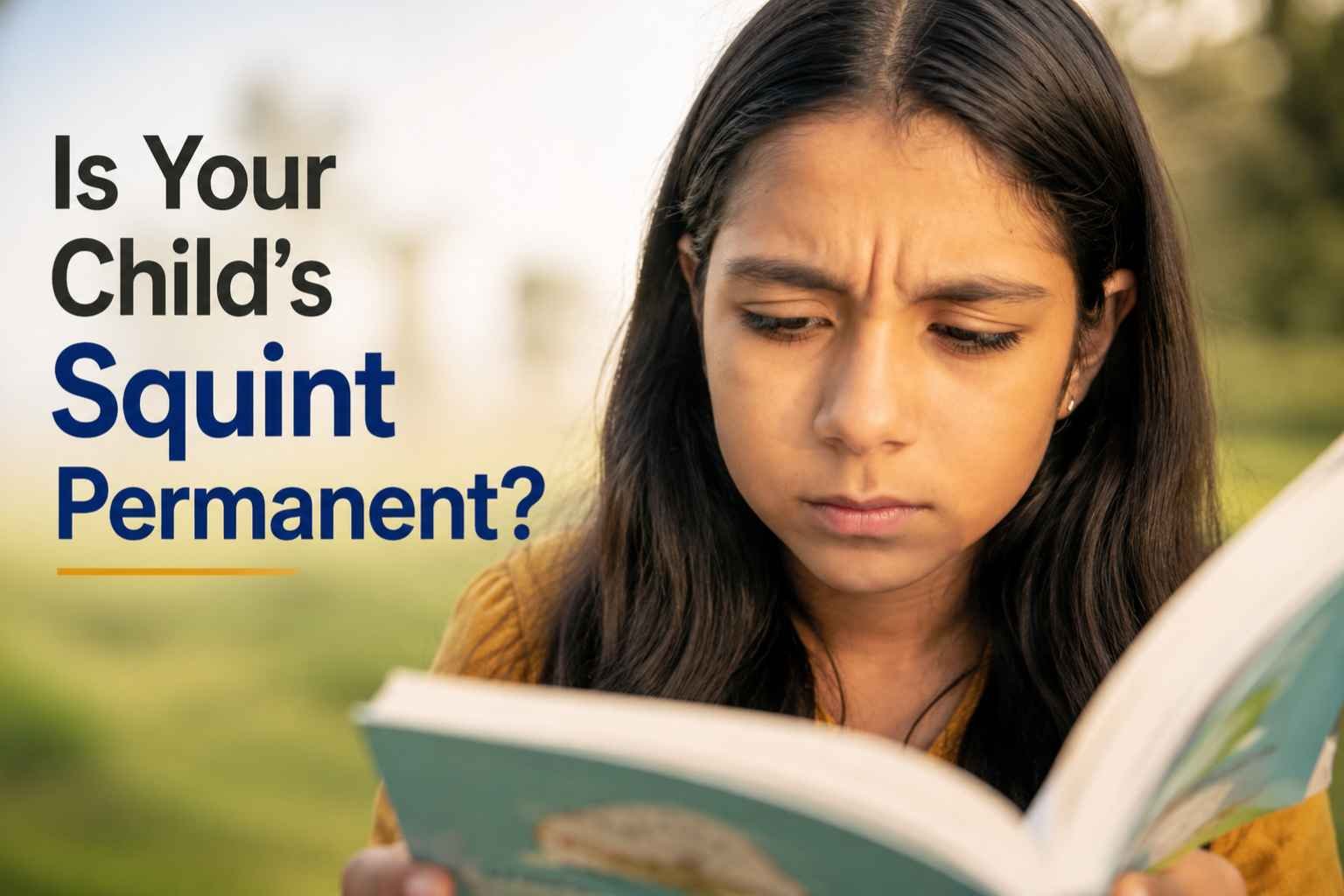
A child’s eyes deserve more than a second glance. Early attention can help guide clearer vision and better eye alignment. Parents often worry when they notice one or both of their child’s eyes turning inward, outward, upward, or downward. However, a child’s permanent condition is not always lifelong. Some forms can improve with early treatment, while others may require ongoing management. The cause, age of the child, severity of the squint, and effect on vision all influence the treatment approach.
Understanding Squint in Children
A squint, medically known as strabismus, occurs when the eyes do not point in the same direction at the same time. If parents wonder whether a child’s squint permanent problem that can be corrected, the answer depends on the underlying cause. Early evaluation by a pediatric ophthalmologist in Vadodara can help determine whether glasses, exercises, patching, medication, or another treatment may be appropriate.
Myth: Every Squint Requires Surgery
Surgery is not always the first treatment for a child squint permanent concern. Depending on the condition, non-surgical options may include:
- Prescription glasses to correct refractive errors
- Eye patching to encourage use of a weaker eye
- Special lenses or prisms in selected cases
- Vision therapy when clinically appropriate
- Observation and regular monitoring
A pediatric eye checkup in Vadodara can help identify the most suitable approach for each child.
When Is Surgery Considered?
When non-surgical methods do not adequately improve alignment, surgery may be recommended. Squint surgery for eye alignment adjusts the position or function of specific eye muscles to help the eyes work together more effectively. A pediatric ophthalmologist in Vadodara can explain whether surgery is appropriate based on the child’s age, eye alignment, and visual development.
Why Early Evaluation Matters
Leaving a squint untreated can sometimes affect the development of normal vision in one eye, particularly when amblyopia is present. Parents should not assume a child’s squint permanent issue that will resolve on its own. Scheduling a pediatric eye checkup in Vadodara allows specialists to assess eye alignment, visual acuity, focusing ability, and overall eye health.
Regular follow-up is also important because a child’s vision can change as they grow. An experienced pediatric ophthalmologist in Vadodara can monitor progress and modify treatment when necessary. If your child has a permanent child squint, timely care can provide a better opportunity to support normal visual development.
Conclusion
A child squint is not necessarily permanent, and modern treatment offers several options depending on its cause and severity. Early assessment can help prevent complications and support better eye coordination and visual development. If you are looking for a trusted pediatric ophthalmologist in Vadodara or need a pediatric eye checkup in Vadodara, Desai Eye Hospitals provides specialised pediatric eye care, advanced diagnostics, and personalised treatment plans for children. Concerned about your child’s eye alignment or squint? Contact us today to schedule a pediatric eye checkup and get expert guidance on the right treatment approach.