

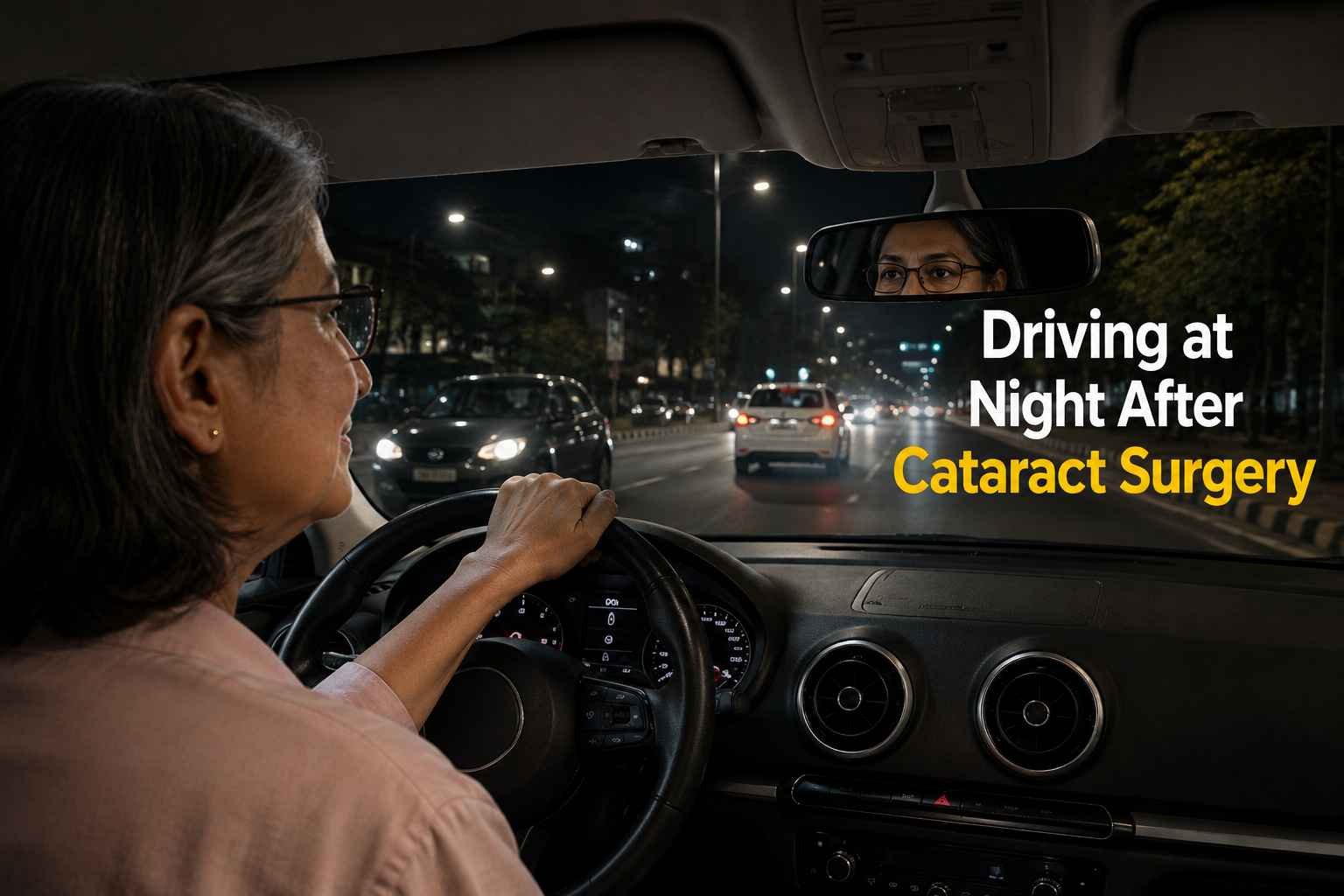
Clearer vision can make the road ahead feel brighter, but comfortable night driving begins with the right lens and proper postoperative care. For many patients, driving at night after cataract surgery becomes easier as cloudy vision improves. However, glare, halos around headlights, and sensitivity to bright lights can still occur during the early recovery period. These symptoms may gradually settle as the eyes heal and the brain adapts to the new intraocular lens.
What Are Cataracts?
What are cataracts? They are cloudy areas that develop in the natural lens of the eye, often causing blurred vision, glare, faded colours, and difficulty seeing in low-light conditions. Cataract surgery removes the cloudy lens and replaces it with an artificial intraocular lens, helping restore clearer vision.
Why Night Driving Can Still Be Challenging
Even after successful surgery, driving at night after cataract surgery may initially feel uncomfortable. Headlights and streetlights can appear brighter, and some patients may notice halos or glare. These effects can depend on the type of intraocular lens, existing eye conditions, pupil size, and individual visual adaptation.
How Modern Lenses Can Reduce Glare and Halos
Modern intraocular lenses are designed to provide improved visual quality and can offer different benefits depending on the patient’s needs. During a consultation for a cataract surgery procedure in Vadodara, your ophthalmologist can assess your lifestyle, visual requirements, and eye health before recommending a suitable lens.
A personalised lens choice may help patients who frequently drive at night achieve more comfortable vision. However, no lens can guarantee complete elimination of glare or halos for every patient.
When Is It Safe to Drive at Night?
Patients should avoid driving at night after cataract surgery until their surgeon confirms that their vision is sufficiently clear and their eyes have recovered. Before returning to nighttime driving, your specialist may consider:
- Visual clarity and sharpness
- Comfort when facing headlights
- Depth perception
- Presence of glare or halos
- Overall recovery of the operated eye
Consulting the best cataract surgeon in Vadodara ensures that your recovery and visual performance are evaluated properly. If glare or halos persist, your specialist can determine whether they are part of normal adaptation or require further assessment.
Choosing the Right Cataract Care
A personalised approach is important when planning driving at night after cataract surgery. An experienced best cataract surgeon in Vadodara can discuss available lens options and explain their potential advantages and limitations. Choosing a trusted provider for cataract surgery procedure in Vadodara also ensures access to appropriate preoperative assessments and postoperative monitoring.
If you continue experiencing significant glare while driving at night after cataract surgery, do not ignore the symptoms. An eye examination can help identify whether the cause is related to lens adaptation, dry eye, residual refractive error, or another eye condition.
Conclusion
Driving at night after cataract surgery can become more comfortable as vision stabilises and the eyes adapt to the new lens. Choosing an appropriate intraocular lens and following postoperative instructions can support better visual outcomes. If you are considering cataract treatment, Desai Eye Hospitals provides an expert cataract surgery procedure in Vadodara with personalised lens guidance and comprehensive postoperative care from an experienced best cataract surgeon in Vadodara.
Struggling with glare or halos after cataract surgery? Contact us today to schedule a comprehensive eye evaluation and discuss your options for clearer, more comfortable vision.