

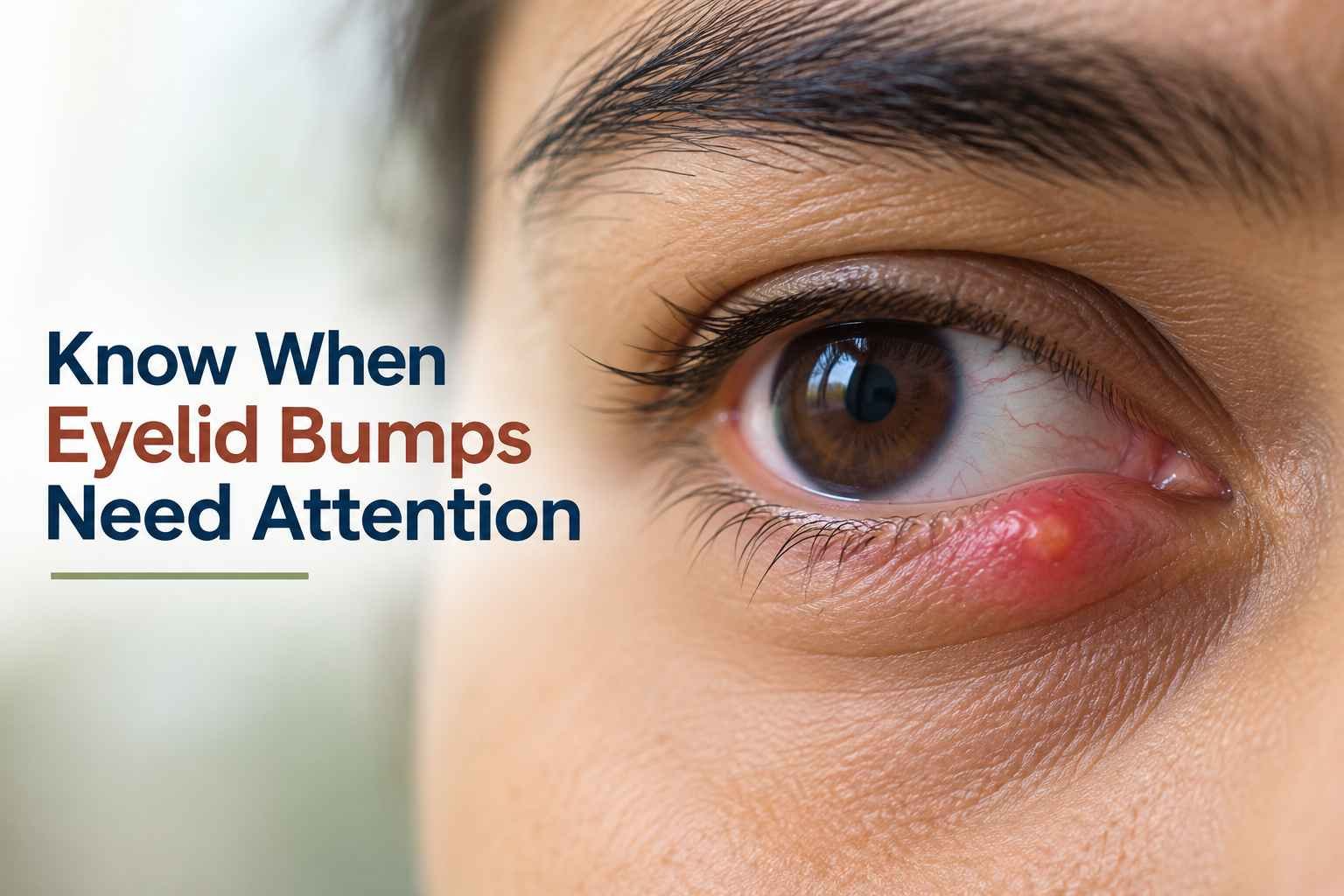
Not every eyelid bump is cause for alarm, but every persistent change deserves attention. A small bump on the eyelid can be easy to ignore, especially when it causes little discomfort. It may be a common stye, a blocked oil gland or another benign growth. However, persistent or unusual changes should not always be dismissed. Understanding the different types of eyelid bumps and growths can help you recognise when an eye examination may be appropriate.
What Causes Eyelid Bumps?
The eyelids contain tiny oil glands that help maintain a healthy tear film. When one of these glands becomes blocked or inflamed, a bump can develop.
A stye, also called a hordeolum, is usually a tender, red lump that develops near the edge of the eyelid. It may occur when an eyelash follicle or nearby gland becomes infected or inflamed. A chalazion is different. It usually develops because an oil gland becomes blocked and may appear as a firmer lump that is not particularly painful.
Many eyelid bumps and growths are harmless and may improve with appropriate care. However, the appearance, duration and behaviour of a lump can help determine whether further assessment is needed.
When a Stye May Need Medical Attention
Most uncomplicated styes settle with time and suitable home care. Warm compresses may help encourage drainage and relieve discomfort. It is important not to squeeze or puncture the bump, as this can potentially worsen inflammation or spread infection.
A professional examination becomes more important when a lump is unusually painful, repeatedly returns, affects vision, becomes increasingly swollen or does not improve as expected.
If symptoms persist, an ophthalmologist can determine whether the problem is a stye, chalazion or another eyelid condition. The appropriate best eye treatment in Vadodara depends on the underlying cause rather than simply the appearance of the bump.
Could a Persistent Eyelid Lump Be Something More Serious?
Drooping Eyelids and Other Changes That Should Not Be Ignored: Most eyelid lumps are not cancerous, but some persistent lesions can require closer evaluation. Certain eyelid cancers may initially resemble a recurring stye or chalazion, particularly when a lesion repeatedly develops in the same location.
Warning signs can include a lump that does not heal, repeated growth in the same area, unexplained bleeding or crusting, loss of eyelashes around the lesion, changes in colour or an alteration in the shape of the eyelid.
Drooping eyelids can have several causes and are not automatically related to an eyelid growth. However, a noticeable change in eyelid position alongside another persistent lesion should be assessed rather than assumed to be a normal part of ageing.
Signs That Your Eyelid Needs a Closer Look
Pay attention to how a lump develops and changes over time. A persistent lesion deserves professional evaluation, especially when it behaves differently from a typical stye.
Some features that warrant attention include:
- A lump that continues growing
- A lesion that repeatedly returns
- Unexplained bleeding or crusting
- Loss of eyelashes around the affected area
- Persistent redness or irritation
- Changes in the eyelid’s appearance
- Blurred or disturbed vision
These signs do not necessarily mean that a growth is serious. They simply indicate that an examination may be useful.
A modern eye center in Vadodara can assess the eyelid and surrounding structures to determine whether observation, medication, a minor procedure or additional investigation may be appropriate.
How Are Eyelid Bumps Diagnosed?
Diagnosis usually begins with a detailed examination of the eyelid and surrounding eye structures. The ophthalmologist may ask how long the bump has been present, whether it has changed in size, and whether similar lesions have occurred previously.
The appearance and location of the lesion can provide useful information. In some cases, particularly when a lesion is persistent or unusual, further investigation may be recommended.
It is important not to self-diagnose based solely on photographs or online descriptions. Several eyelid conditions can look similar while requiring different approaches.
Seeking assessment at a modern eye center in Vadodara can help ensure that persistent eyelid bumps and growths are evaluated appropriately.
Stye, Chalazion or Something Else?
A stye is commonly associated with tenderness, redness and inflammation, particularly near the eyelid margin. A chalazion often presents as a firmer, less painful lump caused by a blocked oil gland.
Other eyelid lesions can include cysts, benign skin growths and, less commonly, malignant tumours. Because their appearances can overlap, persistence and recurrence are important considerations.
A bump that improves and disappears is generally less concerning than one that remains unchanged or repeatedly returns in the same location. Even so, only a clinical assessment can establish the likely cause.
For patients who need best eye treatment in Vadodara, choosing care based on an accurate diagnosis is more useful than treating every eyelid lump in the same way.
Why Recurrent Eyelid Growths Should Be Checked
A recurring lump may simply reflect ongoing blockage or inflammation of the eyelid glands. However, repeated growth in exactly the same area should not automatically be treated as another ordinary stye.
An ophthalmologist may examine the lesion more closely and determine whether additional testing is necessary. If tissue needs to be examined, this can help establish a more specific diagnosis.
Early evaluation can also prevent a persistent problem from being overlooked. This is particularly relevant when the lesion is accompanied by changes to nearby eyelashes, bleeding or alterations in the eyelid’s normal appearance.
Professional evaluation of eyelid bumps and growths can therefore provide reassurance when a lesion is harmless and appropriate treatment when further care is required.
When Should You See an Eye Specialist?
You do not necessarily need urgent medical attention for every small eyelid bump. However, arrange an eye examination if the lesion persists, repeatedly returns, becomes larger, interferes with vision or develops unusual features.
Sudden significant swelling, severe pain, changes in vision or signs of a spreading infection may require more prompt medical assessment.
An ophthalmologist can explain whether the condition requires observation or treatment. Depending on the diagnosis, the best eye treatment in Vadodara may involve conservative care, prescription medication, drainage or removal of a lesion.
Do Not Squeeze or Ignore the Bump
Trying to squeeze an eyelid lump can cause additional irritation and may increase the risk of infection. Instead, follow appropriate eye-care advice and monitor changes in size, colour, discomfort and appearance.
It is also useful to avoid sharing eye makeup and to maintain good eyelid hygiene, particularly if styes occur frequently.
If an apparently simple bump continues to return, professional assessment is preferable to repeatedly treating it at home. A modern eye center in Vadodara can help determine why the lesion is recurring and whether another condition needs to be considered.
Protect Your Eyelid Health With Timely Care
Most eyelid bumps and growths are not serious, but persistent or unusual lesions deserve attention. A stye or chalazion can often be managed effectively, while less common conditions may require a different approach.
The important point is not to panic, but also not to ignore a change that persists, grows or repeatedly returns. An examination can distinguish a routine eyelid problem from a condition requiring further investigation.
At Desai Eye Hospitals, patients can receive professional evaluation for eyelid concerns and guidance based on the nature and severity of the condition. Getting the right diagnosis is an important first step towards appropriate eye care.
If you have a persistent eyelid bump, recurring stye or unusual growth, contact Desai Eye Hospitals today to schedule an eye examination and discuss the right care for your eyes.