

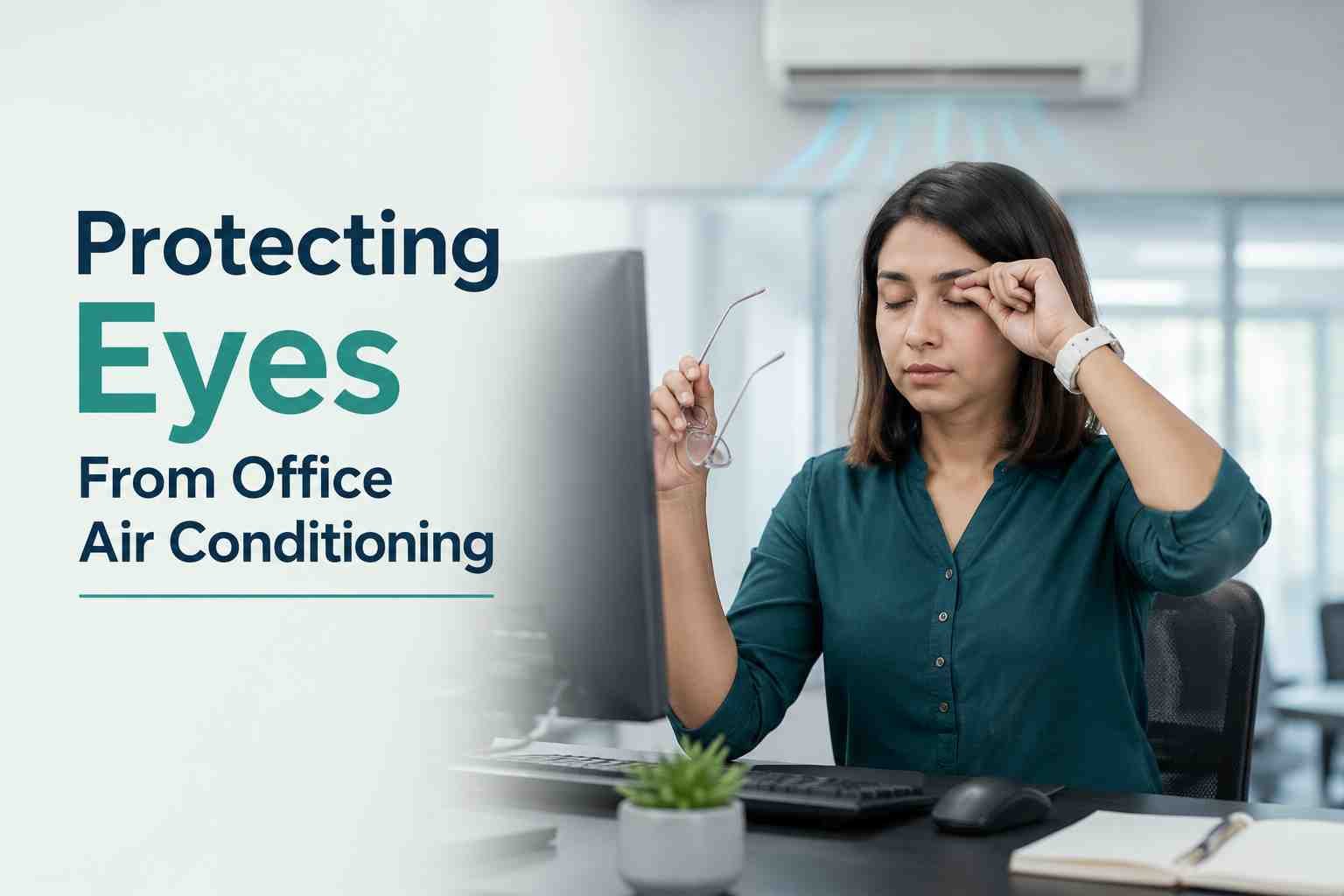
Cool air may keep your workplace comfortable, but your eyes need comfort too. Spending long hours in an air-conditioned office can make your eyes feel dry, irritated, or tired. Air conditioning can reduce humidity and increase the evaporation of tears from the surface of the eyes. Combined with prolonged screen use, infrequent blinking and indoor airflow, this can contribute to dry eye symptoms. Knowing how to protect eyes in air-conditioned environments can help you maintain better eye comfort throughout the working day.
Why Air Conditioning Can Make Your Eyes Dry
Air conditioners regulate indoor temperature by circulating and cooling air. Depending on the environment, this can reduce humidity and create conditions in which tears evaporate more quickly.
When the tear film becomes unstable, the eyes may feel gritty, burning or uncomfortable. Some people may also experience watering, redness or temporary blurred vision.
The issue may become more noticeable when sitting directly under an air-conditioning vent. Continuous airflow across the face can increase evaporation from the eye surface.
Learning how to protect eyes in air-conditioned workplaces therefore starts with understanding the environmental factors that contribute to dryness.
How Office Screens Add to the Problem
Air conditioning is not always the only reason for dry eye symptoms in an office. Prolonged screen use can also affect the tear film.
When concentrating on a computer, people often blink less frequently or may not fully close their eyelids with every blink. This gives the tears less opportunity to spread evenly across the eye surface.
Combining reduced blinking with dry indoor air can make discomfort more noticeable.
If your work requires several hours of computer use each day, making a conscious effort to blink regularly and take short visual breaks can support eye comfort and help protect eyes in air-conditioned surroundings.
Signs Your Eyes May Be Dry
Dry eye symptoms can vary from person to person. Common complaints may include:
- Burning or stinging
- A gritty or sandy sensation
- Redness
- Excessive watering
- Sensitivity to light
- Blurred or fluctuating vision
- Eye fatigue
- Difficulty keeping the eyes comfortable during screen work
These symptoms do not always mean that air conditioning is the sole cause. Allergies, contact lens use, certain medicines, eyelid problems, and other eye conditions can also contribute.
If symptoms persist, an eye examination can help identify the underlying cause.
Adjust Your Workspace to Protect Your Eyes
Small changes to your office environment can make a meaningful difference to eye comfort. If possible, avoid sitting directly beneath an air-conditioning vent or in the path of strong airflow.
You can also consider adjusting the direction of the airflow so that it does not blow directly towards your face.
Keeping the computer screen at a comfortable distance and positioning it slightly below eye level may also reduce the amount of exposed eye surface.
These simple changes can help protect eyes in air-conditioned offices, particularly when combined with regular breaks from screens.
Take Regular Screen Breaks
Long periods of uninterrupted screen use can contribute to eye fatigue. A simple way to reduce strain is to periodically look away from the screen and focus on something farther away.
Short breaks can allow your eyes to relax and encourage more natural blinking.
It is also useful to avoid spending every break looking at another screen. Switching from a computer to a mobile phone may not provide the visual rest your eyes need.
A practical routine of screen breaks, regular blinking and sensible workspace adjustments can help protect eyes in air-conditioned environments.
Keep Your Eyes Comfortable Without Overusing Eye Drops
Artificial tears may provide relief for some people with dry eye symptoms. However, not every eye drop is suitable for every person, and frequent use of certain products without professional guidance may not address the underlying cause.
If your eyes regularly feel dry or irritated, an eye specialist can assess your tear film and recommend appropriate treatment.
People seeking comprehensive eye treatment in Vadodara can benefit from an examination that looks beyond temporary symptoms and considers factors such as screen exposure, environmental conditions, and overall eye health.
Stay Hydrated and Pay Attention to Nutrition
Adequate fluid intake supports normal body functions, although simply drinking more water is not a cure for dry eye disease.
A balanced diet also contributes to overall eye health. Nutrients such as omega-3 fatty acids, vitamin A, and other essential nutrients play roles in maintaining normal eye function.
The broader concept of nutrients for sight is important, but dietary changes should be viewed as part of general eye health rather than a replacement for appropriate treatment when dry eye symptoms persist.
If you have a specific nutritional concern, discuss it with a qualified healthcare professional.
Why Contact Lens Wearers May Need Extra Care
People who wear contact lenses may notice dryness more easily in air-conditioned environments. Reduced humidity and prolonged screen use can make lenses feel less comfortable over the course of the day.
Following the recommended wearing schedule and lens-care instructions is important. Avoid sleeping in lenses unless they have specifically been prescribed for that use.
If contact lenses consistently cause discomfort, redness or blurred vision, speak with an eye care professional rather than simply continuing to wear them.
An assessment as part of holistic eye care services in Vadodara can help identify whether your symptoms are related to dry eye, lens use or another condition.
When Should You See an Eye Specialist?
Occasional dryness after a long day in an air-conditioned office may improve with environmental adjustments and rest. However, persistent or worsening symptoms deserve professional attention.
You should consider an eye examination if you regularly experience:
- Persistent redness or irritation
- Recurrent blurred vision
- Significant sensitivity to light
- Eye pain
- Frequent watering
- A persistent gritty sensation
- Symptoms that interfere with work or daily activities
An eye specialist can determine whether you have dry eye syndrome or another condition requiring treatment.
Access to comprehensive eye treatment in Vadodara can be particularly useful when simple workplace adjustments have not provided sufficient relief.
How to Protect Your Eyes During Long Office Hours
A consistent eye-friendly routine can make air-conditioned work more comfortable. Try to avoid direct airflow, blink consciously during screen use, and take regular visual breaks.
Adjust your monitor position and brightness to a comfortable level, and avoid working in a room that is excessively dry when environmental controls can be changed.
If your workplace permits it, maintaining a more comfortable humidity level may also help reduce excessive tear evaporation.
These habits can help protect eyes in air-conditioned offices without requiring major changes to your daily routine.
When Workplace Changes Are Not Enough
If you continue to experience dry eye symptoms despite improving your workspace and screen habits, there may be an underlying condition that requires attention.
Dry eye can have multiple causes, and treatment should be tailored to the individual. Depending on the findings, an eye specialist may recommend lubricating drops, changes to existing habits, treatment for eyelid or ocular surface problems, or other appropriate measures.
For people seeking holistic eye care services in Vadodara, a comprehensive assessment can help identify contributing factors and establish a suitable care plan.
Building Better Eye Habits for Air-Conditioned Offices
Working in an air-conditioned office does not mean you have to accept persistent eye discomfort as unavoidable. Paying attention to airflow, screen habits, blinking and the overall office environment can help reduce some common triggers.
Remember to protect eyes in air-conditioned workplaces by avoiding direct vents, taking regular screen breaks and seeking professional advice when symptoms persist.
Your eyes deserve attention just as much as the rest of your workplace routine.
Conclusion
Air-conditioned offices can create a dry indoor environment, while prolonged screen use can further increase eye discomfort. Simple measures can help protect eyes in air-conditioned workplaces, but persistent symptoms should not be ignored.
At Desai Eye Hospitals, patients can receive professional evaluation and personalised guidance for dry eye symptoms and other eye concerns. With appropriate assessment, you can understand what is causing your discomfort and take practical steps towards healthier, more comfortable vision.
Experiencing dry, irritated or tired eyes at work? Contact us today to schedule a comprehensive eye examination and get personalised guidance for protecting your eyes in air-conditioned environments.