Clear vision begins with the right decision, not simply the fastest procedure. LASIK has become a popular option for people who want to reduce their dependence on glasses or contact lenses. However, not everyone is automatically a suitable candidate. Existing eye conditions, including dry eyes or a thin cornea, can influence whether LASIK is appropriate and how safely the procedure can be performed.
The good news is that being told you may not be an ideal LASIK candidate does not necessarily mean you have to live with glasses forever. Modern vision correction offers several alternatives, and a detailed assessment can help determine which option is safest for your eyes.
Why Dry Eyes or Thin Cornea Matter Before LASIK
LASIK works by reshaping the cornea with a laser to correct the way light enters the eye. Since the procedure involves creating a corneal flap and removing a calculated amount of corneal tissue, the existing condition and thickness of the cornea are important considerations.
People with dry eyes or a thin cornea may require additional evaluation before proceeding. Dryness can sometimes become more noticeable after refractive surgery, while a particularly thin or structurally weak cornea may increase the risk of complications associated with excessive tissue removal.
This does not mean that every person with these concerns is automatically excluded. Suitability depends on several factors, including the severity of dryness, corneal measurements, eye health, prescription, and overall stability of vision.
How Dry Eye Can Affect LASIK Candidacy
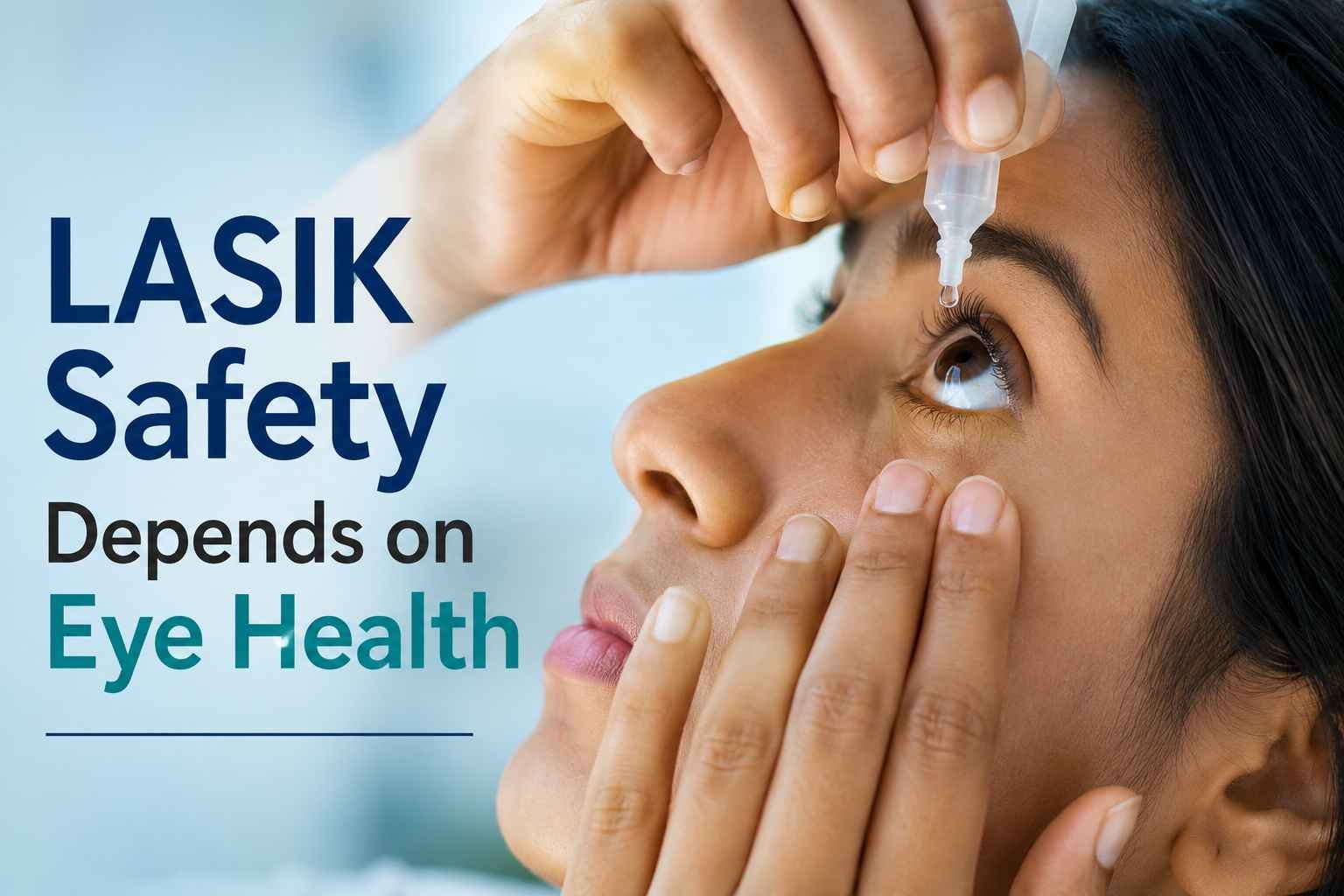
Dry eye is relatively common and can cause burning, irritation, fluctuating vision, redness, or a gritty sensation. LASIK can temporarily affect the nerves responsible for corneal sensation and tear production, which may make existing dryness more noticeable during recovery.
For someone with dry eyes or a thin cornea, an eye specialist may first recommend managing the dry eye condition before considering surgery. This could involve lubricating eye drops, treating eyelid or tear-film problems, improving screen habits, or addressing environmental triggers.
Once the surface of the eye becomes healthier and more stable, the specialist can reassess whether laser vision correction is appropriate.
Why Corneal Thickness Is Important
The cornea needs sufficient structural strength to maintain its shape after laser reshaping. During LASIK, some corneal tissue is removed to correct the refractive error.
If someone has dry eyes or a thin cornea, the thickness and shape of the cornea need to be assessed carefully. Corneal thickness alone is not the only consideration. The overall structure, curvature, prescription, and amount of tissue that would need to be removed are also relevant.
Advanced diagnostic testing can help specialists understand whether the cornea is suitable for a particular refractive procedure.
Understanding the LASIK Eligibility Checklist
A proper LASIK eligibility checklist involves much more than checking your glasses prescription. Before recommending surgery, an eye specialist may assess:
- Corneal thickness and shape
- Stability of your prescription
- Tear-film and dry eye status
- Overall eye health
- Pupil size
- Existing corneal conditions
- Age and general medical history
- Previous eye surgery or injuries
These assessments help determine whether LASIK is appropriate and which procedure may provide the safest outcome.
Does Having Dry Eyes or Thin Cornea Always Rule Out LASIK?
Not necessarily. Some people with mild dry eye symptoms may become suitable candidates after their condition is properly managed. However, people with significantly compromised corneal structure may be advised against LASIK because removing additional tissue could create unnecessary risk.
For patients with dry eyes or thin corneas, the safest decision should be based on detailed diagnostic testing rather than assumptions based on symptoms alone.
An experienced eye specialist in Vadodara can evaluate the condition of your cornea and ocular surface before discussing whether laser vision correction is appropriate.
What If Your Corneas Are Too Thin for LASIK?
If LASIK is not recommended because your corneas are too thin or structurally unsuitable, other vision correction options may be considered.
Depending on your individual eye measurements, alternatives can include procedures such as PRK or phakic intraocular lenses. These procedures work differently from LASIK and may be appropriate for certain patients who are not good LASIK candidates.
For individuals with dry eyes or a thin cornea, the choice of procedure should always be personalised. There is no single alternative that is suitable for everyone.
PRK as a Possible Alternative
PRK is another type of laser vision correction. Unlike LASIK, it does not involve creating a traditional corneal flap. Instead, the surface layer of the cornea is removed or moved aside before the laser reshapes the underlying tissue.
Because the surgical approach differs, PRK may be considered in some patients who are not ideal candidates for LASIK due to corneal thickness or other factors.
However, PRK also has its own eligibility requirements and recovery process. A detailed examination is essential before deciding whether it is appropriate.
Phakic Lenses and Other Vision Correction Options
For some patients who are not suitable candidates for corneal laser procedures, phakic intraocular lenses may provide another option. These lenses are placed inside the eye while the natural lens remains in place.
This approach may be considered for certain prescriptions or corneal conditions where laser reshaping is not recommended.
If you have dry eyes or a thin cornea, discussing all suitable options with an eye specialist in Vadodara can help you understand the potential benefits, limitations, and risks associated with each procedure.
Managing Dry Eyes Before Considering Vision Correction
If dry eye is the primary concern, treatment may be recommended before any decision about surgery. The goal is to improve the health and stability of the ocular surface.
Depending on the underlying cause, management may include artificial tears, warm compresses, eyelid hygiene, environmental adjustments, or other treatments recommended by an eye care professional.
People with dry eyes or thin corneas should avoid rushing into a procedure simply because they want to stop wearing glasses. Healthy eyes and appropriate candidacy should come first.
Why a Detailed Eye Examination Matters
Online eligibility calculators and general guidelines can provide basic information, but they cannot determine whether a specific person is suitable for LASIK.
A comprehensive examination performed by an eye specialist in Vadodara can evaluate your corneal structure, tear film, prescription, and overall eye health. These measurements allow the specialist to explain whether LASIK is appropriate or whether another option may be safer.
For patients looking for holistic eye care services in Vadodara, this complete approach is particularly important because the focus should be on overall eye health rather than simply performing a vision correction procedure.
Choosing Holistic Eye Care Before LASIK
LASIK candidacy should be viewed as part of a broader eye health assessment. Treating existing problems and understanding the condition of the cornea can help ensure that any recommended procedure is based on sound clinical findings.
Access to holistic eye care services in Vadodara can help patients receive evaluation, diagnosis, treatment, and guidance under a comprehensive care approach.
This is especially valuable for people with dry eyes or thin corneas, as their treatment plan may involve managing the ocular surface, monitoring the cornea, and considering alternatives to traditional LASIK.
Questions to Ask Before Choosing LASIK
Before deciding on laser vision correction, ask your eye care professional about your individual risks and alternatives. Useful questions include whether your prescription is stable, whether your corneas have adequate thickness, whether your dry eye needs treatment, and what alternatives may be available if LASIK is not recommended.
A qualified eye specialist in Vadodara can also explain the expected recovery, potential side effects, and long-term considerations associated with the recommended procedure.
Remember that the safest procedure is not necessarily the one that is most popular. It is the one that is appropriate for your individual eyes.
Making the Right Choice for Your Eyes
Having dry eyes or a thin cornea does not automatically mean that you have no options for vision correction. It simply means that your eyes may require more careful assessment before a procedure is selected.
Some patients may become suitable for LASIK after dry eye treatment, while others may be better suited to PRK, phakic lenses, or continued use of glasses or contact lenses.
The priority should always be maintaining the health and structural integrity of your eyes while achieving the best possible visual outcome.
Conclusion
LASIK can provide excellent vision correction for appropriately selected candidates, but dry eyes or a thin cornea can influence whether the procedure is suitable. A detailed examination is essential to assess corneal structure, tear-film health, prescription stability, and other factors before making a decision.
If LASIK is not recommended, alternatives such as PRK or phakic lenses may be considered depending on your individual eye health and requirements. The right choice should always be based on professional evaluation rather than a general eligibility rule.
At Desai Eye Hospitals, patients can receive comprehensive assessments and personalised guidance to understand their vision correction options. Our approach combines holistic eye care services in Vadodara with advanced diagnostic evaluation to help you make an informed decision.
Want to know whether LASIK or an alternative vision correction procedure is right for you? Contact us today to schedule a consultation with an experienced eye specialist and take the first step towards safer, personalised vision correction.