
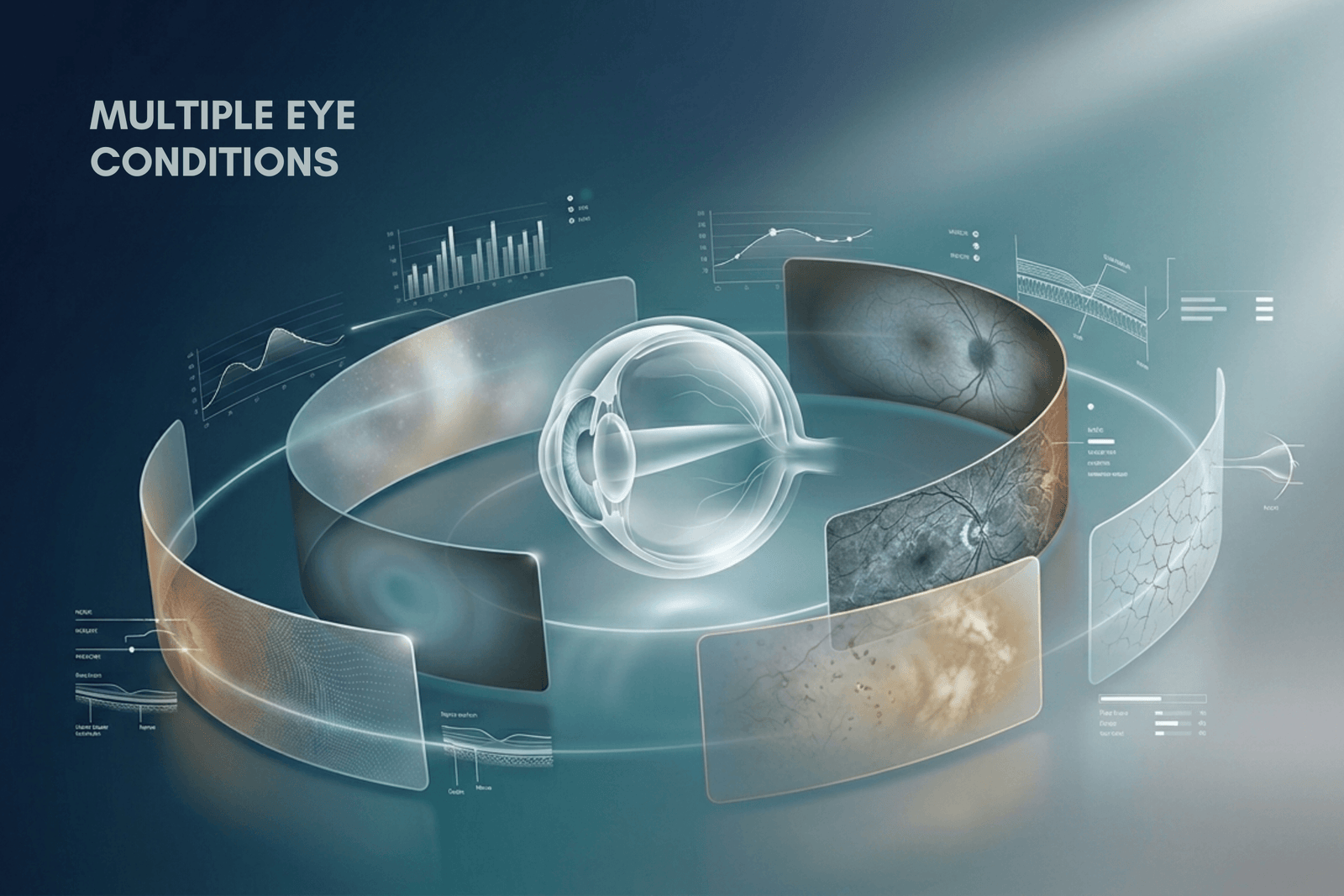
Eyes rarely develop problems one at a time, especially as people grow older or live with conditions like diabetes, high blood pressure, or prolonged screen exposure. Many patients are surprised to learn that they may have multiple eye conditions affecting their vision simultaneously. One issue may begin quietly, while another worsens the symptoms, making diagnosis and treatment more complicated.
For example, a person dealing with cataracts may also develop glaucoma, diabetic retinal changes, or dry eyes. Because the symptoms often overlap, many people assume their blurry vision comes from only one problem and delay proper treatment. This is why regular eye examinations become extremely important, especially when vision changes begin affecting daily life.
Understanding how multiple eye diseases can exist together helps patients recognize the need for timely diagnosis, personalized care, and long-term vision management.
Why Multiple Eye Conditions Often Occur Together
Several eye disorders share common risk factors. Aging, diabetes, genetics, lifestyle habits, and underlying health conditions can increase the chances of developing more than one eye issue at the same time.
Some of the most common combinations include:
- Cataract and glaucoma together
- Diabetic retinopathy with cataracts
- Dry eye syndrome with refractive errors
- Age-related macular degeneration with glaucoma
- Corneal disorders, along with chronic eye inflammation
As people age, the eye naturally undergoes structural and functional changes. This is why many age-related eye conditions tend to overlap. One condition may progress slowly without symptoms, while another causes noticeable discomfort or vision loss.
How Symptoms Can Overlap
One of the biggest challenges with eye conditions at the same time is that the symptoms often look very similar. Patients may experience:
- Blurry vision
- Eye strain
- Headaches
- Difficulty seeing at night
- Sensitivity to light
- Eye redness
- Double vision
- Sudden vision fluctuations
Because there are many possible reasons behind these symptoms, identifying the exact cause without a professional examination becomes difficult. In some cases, what appears to be a simple cataract may actually involve retinal damage or glaucoma as well.
This is why blurry vision with multiple causes should never be ignored. Treating only one issue while another remains undiagnosed can affect long-term vision outcomes.
Cataract and Glaucoma Together
One of the most commonly seen combinations is cataract and glaucoma together. Cataracts cause clouding of the eye’s natural lens, while glaucoma damages the optic nerve due to increased eye pressure or poor nerve health.
When both conditions exist together, patients may notice:
- Gradual vision loss
- Poor night vision
- Reduced contrast sensitivity
- Peripheral vision problems
- Increased glare while driving
Managing both conditions requires careful planning because treatment for one condition may influence the other. In some cases, cataract surgery may help improve glaucoma management, while other patients may need separate glaucoma procedures to protect their optic nerve.
Early diagnosis is essential because glaucoma-related damage cannot usually be reversed once it progresses.
Diabetes and Multiple Eye Problems
Diabetes significantly increases the risk of developing several eye complications at once. Patients with uncontrolled blood sugar often experience:
- Diabetic retinopathy
- Cataracts
- Glaucoma
- Retinal swelling
- Fluctuating vision
Many diabetic eye disease symptoms begin silently. Some patients do not notice any major changes until the condition becomes advanced. Warning signs may include:
- Floating spots
- Sudden blurry vision
- Dark areas in vision
- Difficulty reading
- Poor night vision
When diabetes affects the eyes alongside other vision problems, treatment becomes more complex and requires regular monitoring. Proper diabetic eye care focuses not only on treating existing issues but also on preventing permanent retinal damage.
Why Accurate Diagnosis Matters
Treating a single condition is often straightforward. However, managing multiple eye disorders requires a detailed understanding of how each condition affects overall eye health.
A comprehensive eye evaluation may include:
- Vision testing
- Eye pressure measurement
- Retina examination
- Corneal assessment
- OCT scanning
- Visual field analysis
- Diabetic retinal screening
Advanced diagnostic technology helps specialists identify hidden conditions that may not show obvious symptoms initially. This becomes especially important in older adults and diabetic patients, where several disorders may develop together.
An accurate diagnosis allows doctors to create a treatment strategy that addresses all underlying issues instead of focusing on just one symptom.
Personalized Treatment Plans for Better Vision
Every patient experiences eye problems differently. Some conditions progress rapidly, while others remain stable for years. This is why personalized treatment planning is essential when dealing with multiple eye conditions.
Treatment may include:
Medications
Eye drops and oral medications may help control glaucoma, inflammation, infections, or retinal swelling.
Laser Procedures
Laser treatments are commonly used for diabetic retinal diseases, glaucoma management, and certain retinal tears.
Cataract Surgery
Cataract surgery can improve clarity of vision and may also support better glaucoma control in some patients.
Lifestyle Management
Controlling diabetes, blood pressure, smoking, and screen habits plays a major role in protecting vision.
Long Term Monitoring
Regular follow-ups help specialists track disease progression and adjust treatment plans when needed.
Successful treatment depends on addressing both immediate symptoms and long-term eye health.
The Importance of Early Eye Checkups
Many serious eye diseases develop gradually without pain or obvious warning signs. Patients often delay examinations until vision problems interfere with work, driving, or daily activities.
Routine eye examinations are especially important for:
- Adults over 40
- Diabetic patients
- People with high blood pressure
- Individuals with a family history of eye disease
- Patients experiencing persistent blurry vision
- People using screens for extended hours
Early detection allows doctors to begin treatment before permanent damage occurs.
Protecting Your Vision with Expert Eye Care
Living with more than one eye problem can feel overwhelming, but timely care and proper diagnosis can make a major difference in preserving vision. Whether it is cataract and glaucoma together, diabetic retinal complications, or other overlapping concerns, early intervention helps improve outcomes and quality of life.
If you are experiencing symptoms such as blurry vision, eye discomfort, or vision fluctuations, consulting a qualified Eye specialist in Vadodara is an important step toward protecting your eyesight.
Desai Eye Hospital patients receive advanced diagnosis and personalized care for a wide range of eye conditions. Known as a trusted Eye Hospital in Vadodara, the hospital focuses on comprehensive treatment plans designed for long-term vision health. With experienced specialists, modern diagnostic technology, and patient-focused care, Desai Eye Hospital continues to provide some of the best eye treatment in Vadodara for patients dealing with complex and multiple eye disorders.