

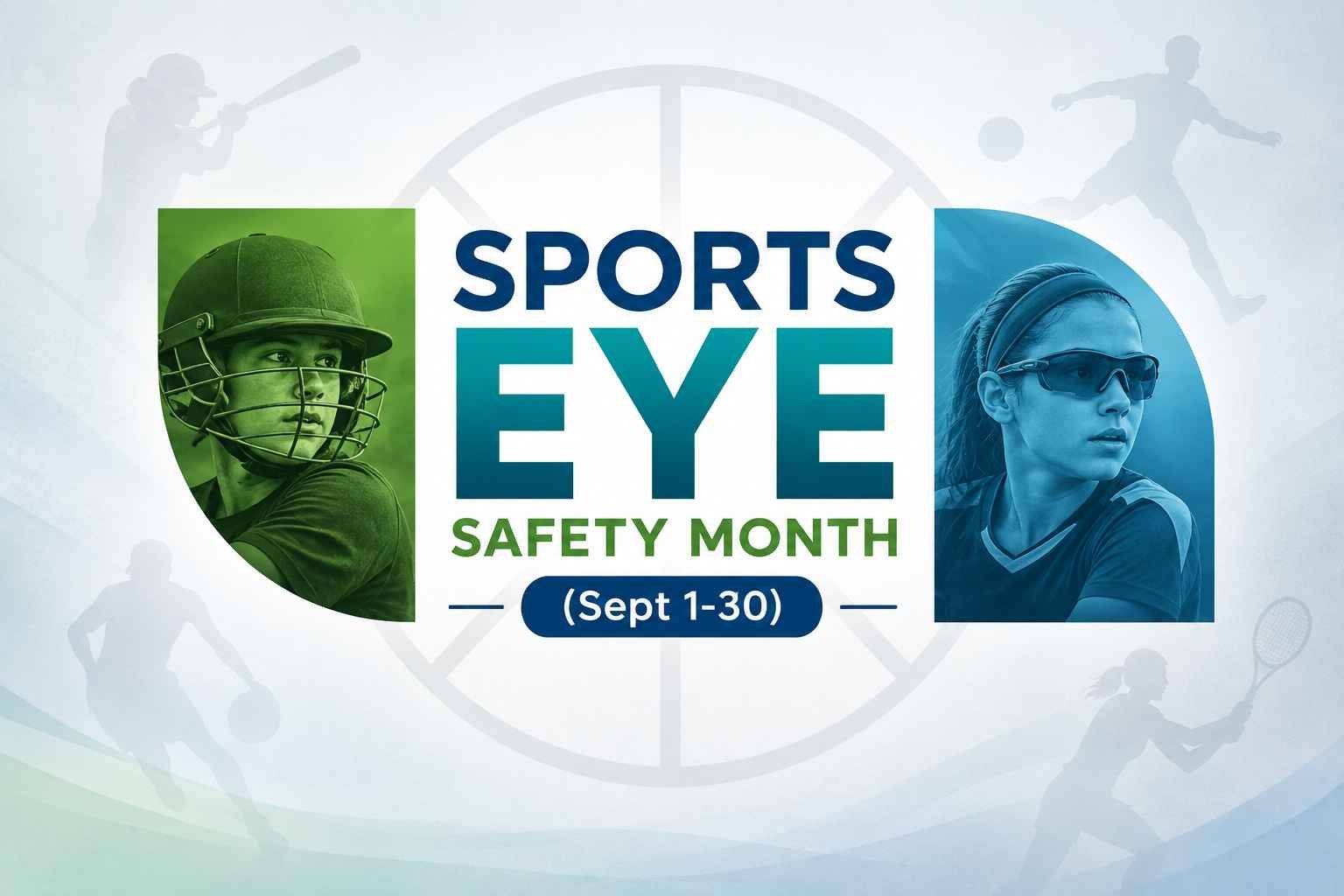
Play with passion, protect your vision, and never let an avoidable injury change the way you see the game. During Sports Eye Safety Month, athletes, parents, coaches, and schools are encouraged to pay closer attention to eye protection during sports activities. From cricket grounds and badminton courts to football fields and swimming pools, sports can expose the eyes to fast-moving balls, equipment, accidental contact, dust, and other hazards. Understanding which activities carry a greater risk and taking appropriate precautions can help protect vision while allowing people to enjoy the sports they love.
Why Sports Eye Safety Month Matters
Sports Eye Safety Month serves as an important reminder that eye injuries are not limited to professional athletes. Children and recreational players can also experience eye trauma during everyday sporting activities. Some injuries may cause temporary discomfort, while more serious trauma can affect the cornea, iris, lens, retina, or other structures inside the eye.
The risk often depends on the speed and type of equipment involved, the amount of physical contact, the playing environment, and whether suitable protective equipment is being used.
Knowing the potential risks before stepping onto the field is therefore an important part of responsible sports participation.
Cricket and Eye Injury Risks
Cricket is one of the most popular sports in India, but the hard cricket ball can travel at considerable speed. A direct impact to the eye can result in bruising around the eye, corneal injury, bleeding inside the eye, lens damage, or more serious internal trauma.
During Sports Eye Safety Month, cricket players should be particularly conscious of situations involving close-range batting, fielding, and wicketkeeping. Protective helmets with appropriate face guards can provide valuable protection, particularly for batters and wicketkeepers.
Players should also avoid continuing to play after a significant impact to the eye without being assessed by a medical professional.
Badminton and Squash Can Also Affect Eye Safety
Racketsports such as badminton and squash may appear relatively safe, but the shuttlecock or ball can move rapidly towards the face. Squash balls can be particularly concerning because of their speed and the confined playing environment.
Wearing suitable protective eyewear designed specifically for the sport can reduce the chance of direct eye contact with equipment. This is especially important for younger players who may have slower reaction times or less experience judging the movement of a ball.
Promoting protective habits during Sports Eye Safety Month can help make these activities safer without taking away from the enjoyment of the game.
Football and Other Contact Sports
Football involves frequent physical contact, falls, elbows, and accidental collisions. Although the ball itself can cause injury, many eye problems can occur because of contact between players.
Sports such as basketball, kabaddi, hockey, and martial arts can carry similar risks. Depending on the activity, an athlete may experience swelling, cuts around the eye, corneal scratches, or injuries affecting deeper structures.
Players with existing vision problems should also ensure that their corrective eyewear is appropriate for physical activity. Ordinary spectacles may not provide adequate protection during contact sports.
Swimming and Eye Health
Swimming is generally considered a low-impact activity, but it can still present several eye-related concerns. Chlorinated water may irritate the eyes and cause temporary redness, burning, or dryness. Accidental contact with another swimmer or the pool wall can also result in trauma.
Swimming goggles can help reduce exposure to pool water and provide a physical barrier around the eyes. However, swimmers should not assume that goggles eliminate every potential risk.
Good hygiene is also important. Sharing goggles or touching the eyes with unclean hands can increase the possibility of irritation or infection.
Common Sports Injuries Athletes Should Recognise
Understanding common sports injuries involving the eyes can help athletes respond appropriately when an accident occurs. Symptoms that deserve attention may include:
- Sudden blurred or reduced vision
- Persistent eye pain
- Increasing redness or swelling
- Sensitivity to light
- Double vision
- New flashes of light or floating spots
- Bleeding in or around the eye
- Difficulty moving the eye
- A visible cut or penetrating injury
A seemingly minor injury should not automatically be ignored. Some internal eye injuries may not produce severe symptoms immediately. If vision changes or significant pain occur after an impact, prompt professional assessment is advisable.
How Protective Eyewear Can Reduce Risk
One of the simplest ways to support Sports Eye Safety Month is to make protective eyewear part of the sporting routine. However, not all protective glasses are suitable for every activity.
Athletes should select eyewear designed for their specific sport and ensure that it fits securely. Protective sports eyewear should be comfortable enough to wear throughout the activity and should not interfere with movement or peripheral vision.
Coaches, schools, and parents can also play an important role by encouraging children to use suitable protection rather than treating it as optional equipment.
When Should You Visit an Eye Specialist?
Not every sports-related eye injury has the same level of seriousness. Minor irritation may settle with appropriate care, but symptoms such as sudden vision loss, severe pain, significant swelling, bleeding, or flashes and floaters require prompt medical attention.
A modern eye center in Vadodara can provide a professional assessment to determine whether an injury has affected the surface of the eye or deeper structures. Depending on the injury, an eye specialist may examine the cornea, retina, lens, eye pressure, and other parts of the eye.
Athletes should avoid rubbing or pressing on an injured eye while waiting for medical evaluation. In cases involving a penetrating injury or significant trauma, urgent medical care is especially important.
Building Better Habits During Sports Eye Safety Month
The message behind Sports Eye Safety Month is not to discourage people from participating in sports. Instead, it is about making eye protection a normal part of an active lifestyle.
Simple habits can make a meaningful difference. Players should use sport-specific protective equipment, follow safety instructions, maintain their equipment, and avoid playing through unexplained vision changes. Parents can ensure children understand why protective eyewear matters, while coaches can reinforce safety practices during training sessions.
Regular eye examinations can also help identify existing vision problems that may affect sports performance or safety.
Choosing the Right Eye Care Support
If you experience an eye injury during sport, professional assessment can help determine the appropriate next step. A trusted vision center in Vadodara can evaluate symptoms and identify whether further treatment or monitoring is necessary.
For athletes with recurring eye concerns, an eye specialist can also provide guidance based on their sport, age, vision requirements, and individual eye health. This can be particularly useful for children and teenagers who participate in competitive activities.
During Sports Eye Safety Month, taking the time to understand these risks can help athletes make better decisions before, during, and after their sporting activities.
Protect Your Eyes While You Enjoy the Game
Sports Eye Safety Month is a timely reminder that protecting your eyes should be part of every athlete’s safety routine. Cricket, badminton, squash, football, basketball, hockey, swimming, and other sports involve different risks, but appropriate precautions can help reduce preventable eye injuries.
If an eye injury occurs, do not ignore persistent symptoms or changes in vision. Seeking timely advice from a modern eye center in Vadodara can help ensure that potential problems are assessed appropriately.
At Desai Eye Hospitals, we believe that protecting vision is an essential part of maintaining an active and healthy lifestyle. Our team provides professional eye care and guidance for patients with a wide range of vision and eye health concerns.
If you have experienced an eye injury during sports or have concerns about your eye health, contact Desai Eye Hospitals today to schedule a consultation and receive appropriate guidance from our eye care specialists.