

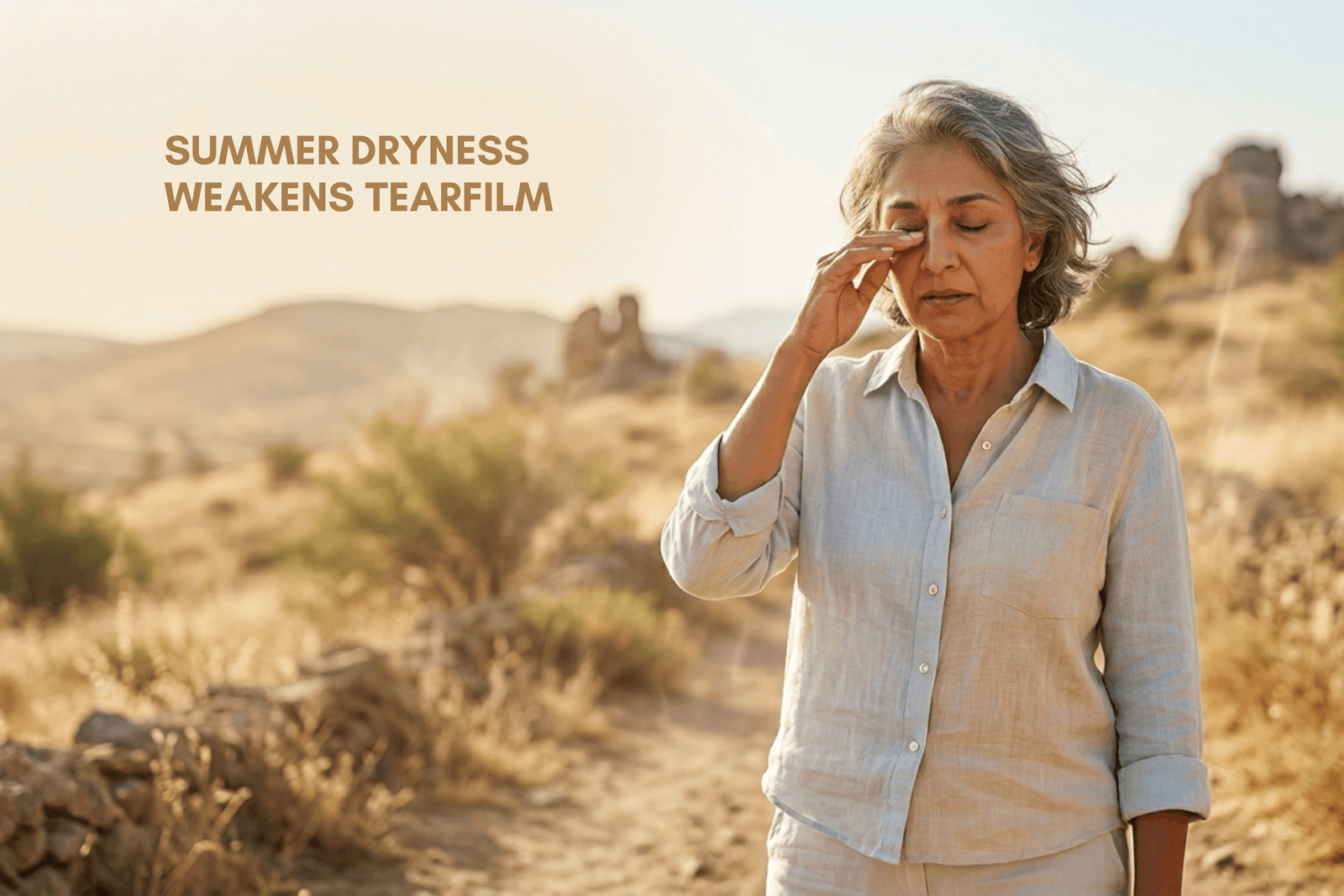
Summer often brings bright skies, outdoor activities, vacations, and long hours in air-conditioned spaces. But while most people focus on protecting their skin from the heat, many overlook how dry environments can silently affect their eyes. If your eyes feel irritated, tired, watery, or sensitive during hot weather, your tear film stability may already be affected.
From intense sunlight and hot winds to air conditioning and dehydration, summer conditions can create the perfect environment for eye discomfort. Understanding how these factors impact your eyes can help you prevent long-term irritation and maintain healthy vision throughout the season.
Why Tear Film Stability Matters for Eye Health
The surface of your eyes is protected by a thin layer of moisture called the tear film. This layer is responsible for keeping the eyes smooth, hydrated, and comfortable. Proper tear film stability is essential for clear vision and overall eye health.
The tear film has three important layers:
- An oily layer that prevents tears from evaporating too quickly
- A watery layer that provides hydration and nutrients
- A mucus layer that helps tears spread evenly across the eye surface
When this balance is disturbed, the tears evaporate faster, leading to tear film dysfunction and eye discomfort.
In summer, dry air and excessive heat can weaken this protective layer, making your eyes more vulnerable to dryness and irritation.
How Dry Environments in Summer Affect Tear Film Stability
Hot weather alone is not the only reason behind eye dryness in hot weather. The environment around you also plays a major role.
Increased Tear Evaporation
During summer, high temperatures and dry winds increase the rate at which tears evaporate from the eye surface. When tears disappear too quickly, the eyes struggle to stay lubricated, affecting tear film stability.
This is especially common in:
- Outdoor workers
- Travelers
- People spending time near beaches or open roads
- Individuals exposed to hot and dusty conditions
Air Conditioning and Indoor Dryness
Many people spend long hours in offices, malls, cars, or homes with air conditioning during the summer. While cooling systems make the temperature comfortable, they also remove moisture from the air.
Dry indoor environments can worsen dry environment eye problems by reducing humidity levels around the eyes. As a result, tears evaporate faster, and the eyes become irritated.
Dehydration During Hot Weather
The body loses more water during summer due to sweating and heat exposure. If you are not drinking enough fluids, your eyes may not produce adequate tears.
Dehydration can directly contribute to:
- Dry eyes in summer
- Burning sensation
- Redness
- Blurry vision
- Eye fatigue
Increased Screen Time
Summer vacations and indoor activities often increase screen exposure. Long hours on mobile phones, laptops, or televisions reduce blinking frequency, which affects the distribution of tears across the eye surface.
When blinking decreases, tear film stability weakens further, increasing discomfort and dryness.
Common Summer Dry Eye Symptoms You Should Not Ignore
Many people assume occasional irritation is normal during hot weather, but persistent symptoms may indicate tear film dysfunction.
Some of the most common summer dry eye symptoms include:
- Burning or stinging sensation
- Red or irritated eyes
- Feeling like something is stuck in the eye
- Excessive watering
- Blurred vision
- Sensitivity to light
- Eye fatigue after screen use
- Difficulty wearing contact lenses
In some cases, dry eyes may also cause reflex tearing, where the eyes produce excessive watery tears to compensate for dryness. However, these tears do not provide proper lubrication.
If these symptoms continue for several days, professional evaluation becomes important.
Who Is More at Risk of Tear Film Dysfunction During Summer
While anyone can experience eye dryness in hot weather, certain individuals are more prone to developing severe symptoms.
People at higher risk include:
- Older adults
- Contact lens users
- People working outdoors
- Individuals spending long hours in air-conditioned environments
- Frequent travelers
- Patients with existing eye conditions
- Individuals with diabetes or autoimmune disorders
People who have undergone previous eye surgeries may also experience greater sensitivity during the summer months.
How to Protect Tear Film Stability in Summer
The good news is that simple lifestyle changes can help reduce irritation and support healthy tear production.
Stay Hydrated Throughout the Day
Drinking enough water is one of the easiest ways to maintain healthy eyes during summer. Proper hydration supports natural tear production and reduces dryness.
Wear Protective Eyewear Outdoors
Sunglasses help protect the eyes from direct sunlight, hot winds, dust, and UV exposure. Wraparound sunglasses are especially effective in preventing tear evaporation.
Limit Direct Air Exposure
Avoid sitting directly in front of air conditioners, fans, or car vents. Constant airflow can dry out the eyes quickly.
Follow the 20 20 20 Rule
If you use screens frequently, look away every 20 minutes and focus on an object 20 feet away for at least 20 seconds. This helps reduce eye strain and encourages blinking.
Use Lubricating Eye Drops if Recommended
Artificial tears may help improve tear film stability and reduce discomfort. However, frequent dryness should always be evaluated by an eye specialist before self treating.
Maintain Good Eye Hygiene
Keeping the eyelids clean can help improve oil gland function, which plays a major role in maintaining a stable tear film.
When Should You Visit an Eye Specialist
Occasional dryness may improve with basic care, but persistent irritation should never be ignored. Long-term tear film dysfunction can affect vision quality and damage the eye surface over time.
You should consult an eye specialist if:
- Symptoms continue for more than a few days
- Vision becomes blurry frequently
- Eye redness increases
- You experience pain or sensitivity to light
- Over-the-counter eye drops do not help
Early diagnosis can help identify the exact cause of dryness and prevent complications.
Protect Your Eyes This Summer With Expert Care
Summer conditions can significantly affect tear film stability, especially when dry air, heat, dehydration, and screen exposure combine. Ignoring symptoms may lead to worsening discomfort and reduced visual quality over time.
At Desai Eye Hospital, patients receive advanced care for dry eyes, tear film dysfunction, and other eye-related concerns using modern diagnostic technology and personalized treatment plans. Whether you are experiencing mild irritation or persistent summer dry eye symptoms, consulting a trusted Eye Specialist in Vadodara can help protect your long-term eye health.
If you are searching for trusted eye specialists in Vadodara, advanced eye care solutions, and the best eye treatment in Vadodara, professional guidance can make all the difference in keeping your eyes healthy and comfortable throughout the summer season.