

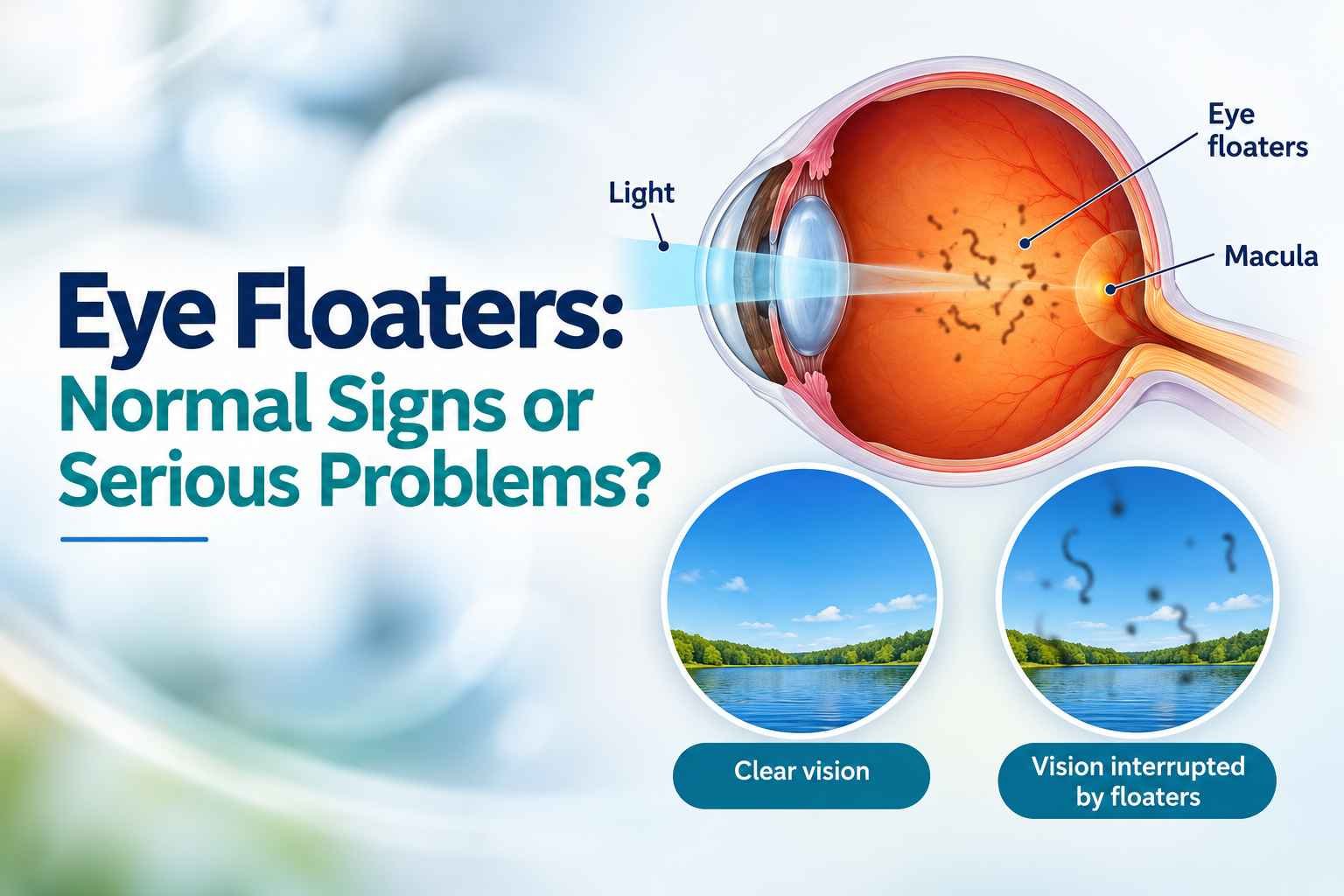
When tiny shadows drift across your vision, knowing what is normal can help you protect what matters most. Eye floaters are small spots, threads, dots, or cobweb-like shapes that seem to move across your field of vision. They are often harmless and become more noticeable against a bright, plain background. However, a sudden increase in floaters can sometimes indicate a serious eye problem, including a retinal tear or detachment. Understanding the warning signs and seeking timely assessment at an eye care hospital in Vadodara can help protect your vision.
What Are Eye Floaters?
Floaters usually develop when tiny clumps or strands form in the vitreous, the gel-like substance inside the eye. As light enters the eye, these structures cast shadows on the retina, creating the appearance of floating spots.
Floaters are common with ageing because the vitreous gradually changes in consistency and may separate from the retina. Many people adapt to occasional floaters, especially when they remain stable over time.
However, new floaters should not automatically be dismissed as a normal part of ageing. A professional examination can help determine whether they are harmless or require treatment.
What Causes Eye Floaters?
Age-related changes in the vitreous are a common cause, but other conditions can also lead to floaters. These include inflammation inside the eye, bleeding into the vitreous, and complications associated with certain eye injuries.
Sometimes, the vitreous pulls on the retina as it changes. This may cause a retinal tear, which can allow fluid to pass beneath the retina and lead to retinal detachment. Without prompt treatment, retinal detachment can result in permanent vision loss.
People with significant short-sightedness, a history of eye injury, or previous retinal problems may have a higher risk of certain retinal conditions. Regular examinations at an eye care hospital in Vadodara can help identify potential concerns, particularly in people with known risk factors.
When Do Flashes and Floaters Become a Warning Sign?
Occasional, long-standing floaters may not indicate a serious condition. However, flashes and floaters that appear suddenly or increase noticeably can signal traction on the retina or a retinal tear.
Seek urgent eye care if you experience:
- A sudden shower of new floaters.
- Brief flashes of light, particularly in peripheral vision.
- A dark curtain or shadow moving across your vision.
- Sudden blurred vision or loss of part of your visual field.
These symptoms require immediate assessment, even if there is no pain. Retinal problems can develop without discomfort, so waiting for symptoms to settle may put your sight at risk.
How Are Eye Floaters Diagnosed?
An eye specialist will ask about when the floaters began, whether their number has changed, and whether you have experienced flashes or vision loss. A dilated retinal examination allows the doctor to inspect the back of the eye for tears, bleeding or detachment.
Additional tests may be recommended if the retina cannot be viewed clearly. The assessment helps determine whether monitoring, further investigation or urgent treatment is necessary.
Choosing an eye care hospital in Vadodara with suitable diagnostic facilities can support timely evaluation when new visual symptoms develop.
Treatment Options for Eye Floaters
Treatment depends on the underlying cause. Stable floaters related to normal ageing often require observation rather than intervention. Over time, they may become less noticeable as the brain adapts.
If floaters result from inflammation, bleeding or another eye condition, treatment focuses on the underlying problem. A retinal tear may require laser treatment or cryotherapy, while retinal detachment often needs surgery.
Procedures to remove persistent floaters are considered only in selected cases because they carry risks. An eye specialist can explain the potential benefits and complications before recommending treatment.
Supporting Your Vision with Holistic Eye Care
Protecting your eyesight involves recognising changes, managing existing eye conditions and attending examinations when recommended. Holistic eye care services in Vadodara can support ongoing eye health through appropriate assessments, guidance and follow-up based on individual needs.
Avoid self-diagnosing new floaters or relying on eye drops to make them disappear. Seek urgent care for sudden symptoms, and follow your specialist’s recommendations if you have previously experienced retinal problems.
Even if floaters appear harmless, an examination at an eye care hospital in Vadodara is particularly important when they are new or changing. Comprehensive holistic eye care services in Vadodara can also help patients understand their eye health and identify concerns that need further attention.
Protect Your Vision with Desai Eye Hospitals
Eye floaters are often harmless, but sudden changes can signal a retinal emergency. Recognising warning signs and seeking timely assessment can help reduce the risk of lasting vision damage.
At Desai Eye Hospitals, patients can seek professional guidance for changes in their vision and discuss appropriate next steps. Access to holistic eye care services in Vadodara can help support informed decisions about eye health and ongoing care.
Noticing new floaters, flashes, or changes in your vision? Contact us to arrange an eye examination and get the guidance you need.