

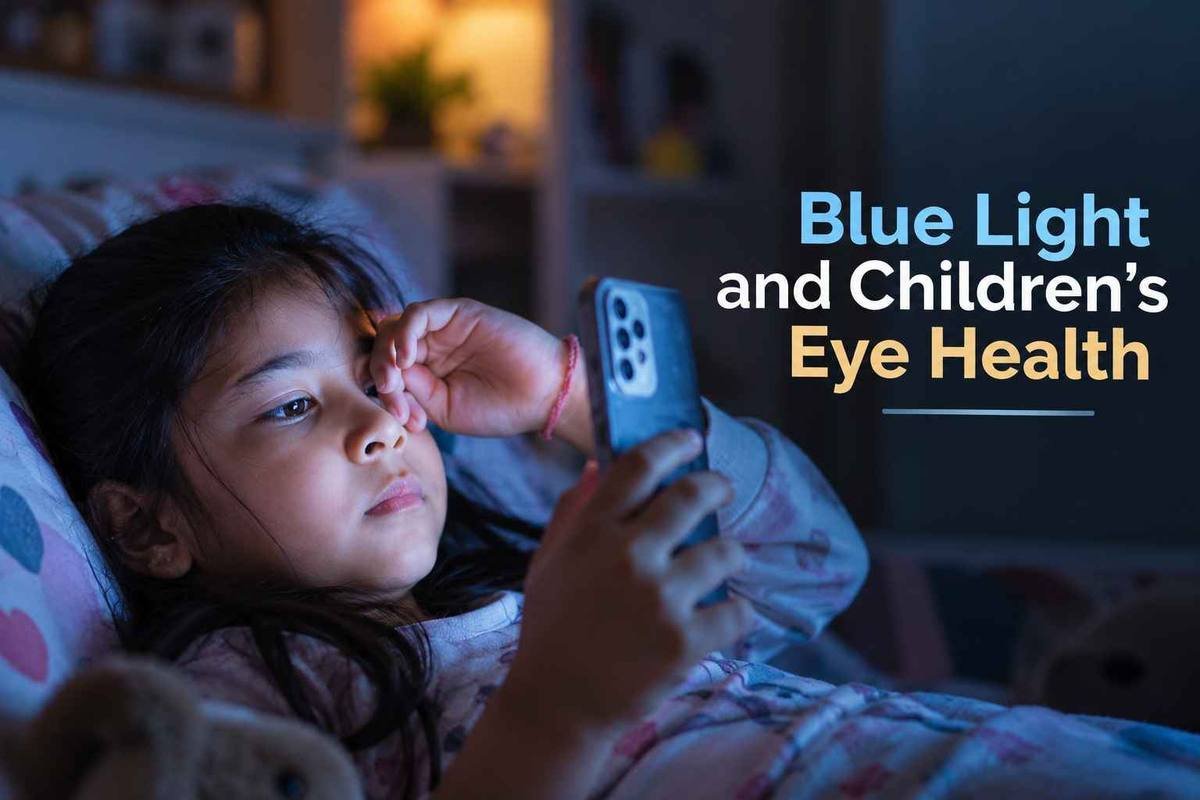
Screens are part of childhood, but understanding how they affect growing eyes can help families make smarter choices. Children now use screens for schoolwork, entertainment, communication and creative activities. Phones, tablets, computers and televisions all expose them to digital displays for different periods of the day. This has led to growing concern about blue light and whether screen exposure can permanently damage children’s eyes. While screen habits deserve attention, the science is more nuanced than many online claims suggest.
What Is Blue Light and Why Are Children Exposed to It?
Blue light is part of the visible light spectrum and is naturally present in sunlight. Digital screens also emit blue light, although the amount is generally much lower than exposure from daylight.
Blue light itself should not automatically be considered harmful. Natural blue light contributes to the body’s sleep-wake cycle, particularly through exposure during the daytime. The bigger concern for children is often how and when screens are used rather than blue light alone.
Parents seeking eye treatment in Vadodara should therefore consider their child’s overall visual habits, rather than focusing only on blue-light exposure.
Can Screen Use Damage Children’s Eyes?
There is no simple evidence that ordinary screen use causes permanent eye damage solely because screens emit blue light. However, prolonged screen use can contribute to temporary symptoms such as tired eyes, dryness, headaches and difficulty maintaining comfortable focus.
Children may also blink less frequently while concentrating on a screen. This can contribute to discomfort, particularly during long periods without breaks.
If a child regularly experiences blurred vision, headaches, eye discomfort or difficulty seeing the board at school, an assessment by an eye surgeon in Vadodara may help identify whether an underlying vision problem is present.
Blue Light and Sleep: What Parents Should Know
Blue light can influence circadian rhythms, particularly when exposure occurs close to bedtime. Screens used late at night may also keep children mentally engaged, making it harder to settle down for sleep.
This does not mean that every child using a tablet in the evening will develop a sleep problem. However, creating a predictable screen-free period before bedtime can support healthier routines.
Keeping devices away from the bed can also reduce the temptation to continue using them late into the night. Families can discuss these habits with an eye care hospital in Vadodara when they have broader concerns about their child’s visual health.
What About Myopia Progression in Children?
Understanding Myopia Progression in Children: Myopia, or short-sightedness, is becoming an important concern for children’s eye health. Children with myopia can see nearby objects clearly but may have difficulty seeing distant objects.
Research has associated increasing rates of childhood myopia with lifestyle factors, including reduced time outdoors and substantial amounts of near-work activity. Screen use may contribute to this pattern because digital devices often involve prolonged near viewing, but it is not accurate to blame blue light alone.
Spending more time outdoors is commonly recommended as part of strategies aimed at reducing the risk of developing myopia. Parents should also arrange appropriate vision checks when a child begins squinting, sitting unusually close to screens or struggling to see distant objects.
Why Screen Distance and Breaks Matter
How a child uses a screen can be more relevant than the screen’s blue-light output. Holding a device very close to the face for long periods can increase sustained near-focus demand.
Parents can encourage children to:
- Take regular breaks from close-up screen activities.
- Keep screens at a comfortable viewing distance.
- Avoid using devices continuously for long periods.
- Spend time outdoors each day.
- Maintain good lighting around the screen.
- Blink regularly, particularly when concentrating.
These habits can support comfortable vision without requiring families to eliminate screens.
Do Blue-Light-Blocking Glasses Really Help?
Blue-light-filtering glasses are widely marketed to parents, but they should not be viewed as a universal solution for screen-related eye problems. Evidence does not establish that these lenses are necessary for every child who uses digital devices.
If a child already wears spectacles, parents should not replace prescribed lenses solely because of concerns about blue light without discussing the decision with an eye-care professional.
An eye surgeon in Vadodara can assess the child’s vision and explain whether any specific lens feature is appropriate based on their individual needs.
When Should Parents Arrange an Eye Examination?
Certain symptoms deserve more attention than general concerns about blue light. Parents should consider professional assessment if a child frequently squints, complains of headaches, has recurring eye discomfort, holds books or devices very close, struggles to see distant objects or shows a noticeable change in visual behaviour.
A comprehensive examination can identify refractive errors and other conditions that may require monitoring or treatment.
Choosing an eye care hospital in Vadodara for regular assessments can also help parents understand how their child’s vision is developing over time.
Creating Healthier Screen Habits at Home
Healthy screen use does not have to mean banning digital devices. Instead, families can establish practical routines that balance screen-based activities with outdoor play, sleep, schoolwork and other activities.
Parents can set consistent boundaries around recreational screen time and encourage children to take breaks during homework or gaming. Devices should ideally not replace outdoor activities, particularly during the daytime.
Children should also be encouraged to tell an adult when their eyes feel uncomfortable or their vision seems different. Early attention can make it easier to identify whether the symptoms are related to screen habits or another visual issue.
For families looking for eye treatment in Vadodara, professional advice can help distinguish temporary digital discomfort from conditions that require ongoing care.
When Screen Symptoms Need More Than a Break
Occasional tiredness after screen use is not necessarily a sign of serious eye disease. However, persistent symptoms should not simply be attributed to digital devices.
A child who continues to experience blurred vision, headaches, eye strain or difficulty seeing clearly after reducing screen exposure may need a detailed eye examination.
An eye surgeon in Vadodara can evaluate visual acuity and other aspects of eye health to determine whether treatment, corrective lenses or monitoring may be appropriate.
A Balanced Approach to Blue Light and Screens
The science surrounding children’s screens is more complex than the idea that blue light from devices directly damages young eyes. Screen habits still matter, particularly when they involve prolonged near work, inadequate breaks, reduced outdoor time or late-night device use.
Parents can focus on practical habits rather than fear. Regular breaks, comfortable viewing distances, outdoor activity, healthy sleep routines and appropriate eye examinations can all form part of responsible children’s eye care.
When concerns arise, seeking eye treatment in Vadodara can provide families with a clearer understanding of the child’s specific visual needs rather than relying on general claims about blue light.
At Desai Eye Hospitals, children and families can receive professional guidance for vision concerns, routine assessments and appropriate eye care based on individual needs.
If your child is experiencing eye strain, headaches, blurred vision or other screen-related concerns, contact Desai Eye Hospitals to schedule a professional eye examination and discuss the right care for your child’s vision.