
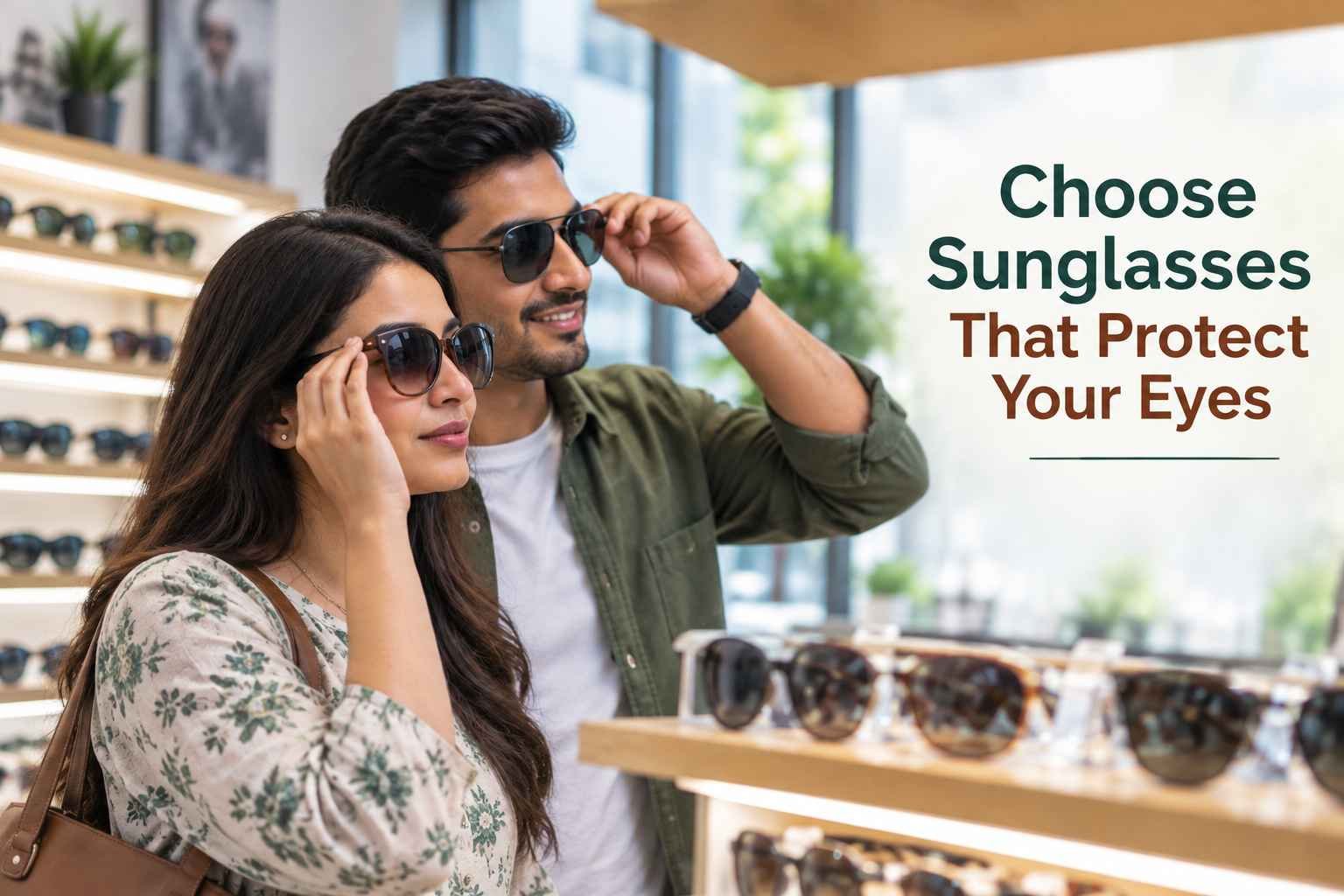
Good sunglasses do more than complete your look. They help shield your eyes from what you cannot see. When it comes to choosing sunglasses, appearance and comfort often receive more attention than actual eye protection. However, ultraviolet radiation from sunlight can affect the eyes over time, and prolonged exposure has been associated with several eye conditions. Understanding UV protection, lens colours, polarisation, and common misconceptions can help you make a more informed decision about protecting your eyes outdoors.
Why UV Protection Matters for Your Eyes
Ultraviolet radiation is invisible, but that does not mean it is harmless. The sun emits UVA and UVB radiation, and prolonged exposure can contribute to damage affecting different parts of the eye and the surrounding skin.
Repeated UV exposure has been associated with conditions such as cataracts and certain growths on the surface of the eye. Wearing sunglasses that provide appropriate UV protection, along with a hat or other shade when appropriate, can reduce direct exposure.
This is why choosing sunglasses should begin with checking their UV protection rather than selecting a pair based only on colour, style, or price.
Can Sunglasses Reduce Cataract Risk?
Cataracts occur when the normally clear lens inside the eye becomes cloudy. Ageing is a major risk factor, but other factors can contribute to cataract development.
Long-term exposure to ultraviolet radiation is considered one of the factors associated with cataract formation. Sunglasses that block 100% of UVA and UVB radiation can help limit the amount of UV reaching the eyes.
However, sunglasses cannot guarantee that cataracts will never develop. Regular eye examinations remain important, particularly as you get older or if you notice changes such as blurred vision, glare, halos, or difficulty seeing at night.
If cataracts begin affecting everyday activities, professional assessment can help determine whether best eye treatment in Vadodara may be appropriate.
What Does 100% UV Protection Actually Mean?
One of the most important points when choosing sunglasses is understanding what the UV label means.
Look for sunglasses labelled as providing 100% UV protection or UV400 protection. These indicate that the lenses are designed to block ultraviolet radiation up to approximately 400 nanometres.
Do not assume that darker lenses automatically provide better UV protection. A very dark lens without adequate UV protection can still allow harmful ultraviolet radiation to reach the eyes.
The protection comes from the lens material or its UV-blocking treatment, not simply from how dark the lens appears.
Does Lens Colour Make Sunglasses Safer?
Lens colour is often misunderstood. Grey, brown, green, amber, and other tints can affect how colours and brightness are perceived, but tint alone does not determine UV protection.
Dark lenses may make bright conditions more comfortable, while certain tints can be useful for specific activities. However, a darker lens is not necessarily a better protective lens.
When choosing sunglasses, prioritise certified UV protection and appropriate optical quality before considering the colour of the lenses.
Polarised Lenses: Protection or Just Comfort?
Polarised sunglasses can be particularly useful around reflective surfaces such as water, roads, and snow because they reduce certain types of reflected glare.
However, polarisation and UV protection are not the same thing. A pair of polarised sunglasses should still provide adequate UVA and UVB protection.
Polarised lenses may improve visual comfort for driving or outdoor activities, but they should not be purchased on the assumption that polarisation alone makes them safer for the eyes.
Can Cheap Sunglasses Protect Your Eyes?
Price does not automatically determine the level of UV protection. An expensive designer pair is not necessarily more protective than a reasonably priced pair that meets appropriate UV protection standards.
When choosing sunglasses, check the product information carefully rather than relying on branding or appearance.
If you are uncertain about the quality or suitability of a pair, an eye care professional can provide useful guidance based on your vision and lifestyle.
How to Choose the Right Sunglasses
Choose the right sunglasses by considering protection, fit, optical quality, and how you intend to use them.
A good pair should fit comfortably without constantly slipping down the nose or pressing against the sides of the head. Larger lenses or wraparound designs may provide additional coverage by reducing the amount of sunlight entering around the edges.
For people who require prescription glasses, prescription sunglasses can provide both vision correction and UV protection.
Sunglasses for Driving and Outdoor Activities
Different activities can create different visual demands. Drivers may benefit from lenses that reduce glare while maintaining comfortable colour perception. People who spend time near water may find polarised lenses particularly helpful for reducing reflected glare.
For outdoor sports, secure-fitting sunglasses that remain comfortable during movement can be useful. Children should also be encouraged to wear appropriate UV-protective eyewear during prolonged outdoor activities.
If you have a specific eye condition or have recently undergone an eye procedure, ask your ophthalmologist whether there are additional precautions you should follow.
Can Sunglasses Prevent All Sun-Related Eye Problems?
This is one of the most common myths surrounding choosing sunglasses. Sunglasses can reduce UV exposure, but they are not a complete shield against every eye condition.
Eye health is influenced by age, genetics, general health, lifestyle, existing eye conditions, and environmental exposure. Sunglasses should therefore be considered one part of a broader eye-care routine.
A wide-brimmed hat can provide additional shade, while avoiding unnecessary prolonged exposure to intense sunlight can further reduce direct UV exposure.
When Should You Have Your Eyes Examined?
Sunglasses are preventive eyewear, but they cannot replace regular eye examinations. An eye examination can identify changes that may not yet be causing noticeable symptoms.
If you experience persistent blurred vision, increasing sensitivity to light, eye pain, unusual spots or flashes, or difficulty seeing clearly, arrange an assessment rather than assuming your sunglasses are responsible.
A modern eye center in Vadodara can assess your vision and overall eye health and provide recommendations based on your individual needs.
For patients with existing eye conditions, professional advice can also help determine whether specialised best eye treatment in Vadodara is required.
Common Sunglasses Mistakes to Avoid
Even people who regularly wear sunglasses can make choices that reduce their effectiveness. Avoid assuming that:
- Darker lenses automatically provide stronger UV protection.
- Polarised lenses always provide UV protection.
- Expensive sunglasses are necessarily better.
- Sunglasses are only needed during summer.
- Wearing sunglasses means you no longer need regular eye examinations.
UV exposure can occur throughout the year, including on cloudy days. Making UV protection a consistent outdoor habit can therefore be more useful than wearing sunglasses only when the sun feels particularly bright.
Your Eyes Deserve More Than a Fashion Choice
When choosing sunglasses, think beyond colour, shape, and fashion. Look for reliable UV protection, a comfortable fit, good optical quality, and lenses appropriate for your daily activities.
If you already have an eye condition or notice changes in your vision, sunglasses should complement professional eye care rather than replace it. A modern eye center in Vadodara can help assess your eye health and recommend appropriate care when necessary.
Similarly, if a condition such as cataract is affecting your quality of life, discussing best eye treatment in Vadodara with an eye specialist can help you understand your available options.
Conclusion
Choosing sunglasses wisely is a simple but valuable part of protecting your eyes from unnecessary UV exposure. While sunglasses cannot prevent every eye condition, appropriate UV protection can help reduce exposure to ultraviolet radiation associated with long-term eye health risks. Understanding the difference between UV protection, lens tint, and polarisation can also help you avoid common sunglasses myths.
At Desai Eye Hospitals, we believe that good eye care combines prevention, regular examinations, and timely treatment when problems arise. Whether you need guidance about outdoor eye protection or professional assessment for an existing concern, our team can help you make informed decisions about your vision.
Looking for personalised advice about your eye health or experiencing changes in your vision? Contact us today to schedule a consultation with our eye care specialists.