

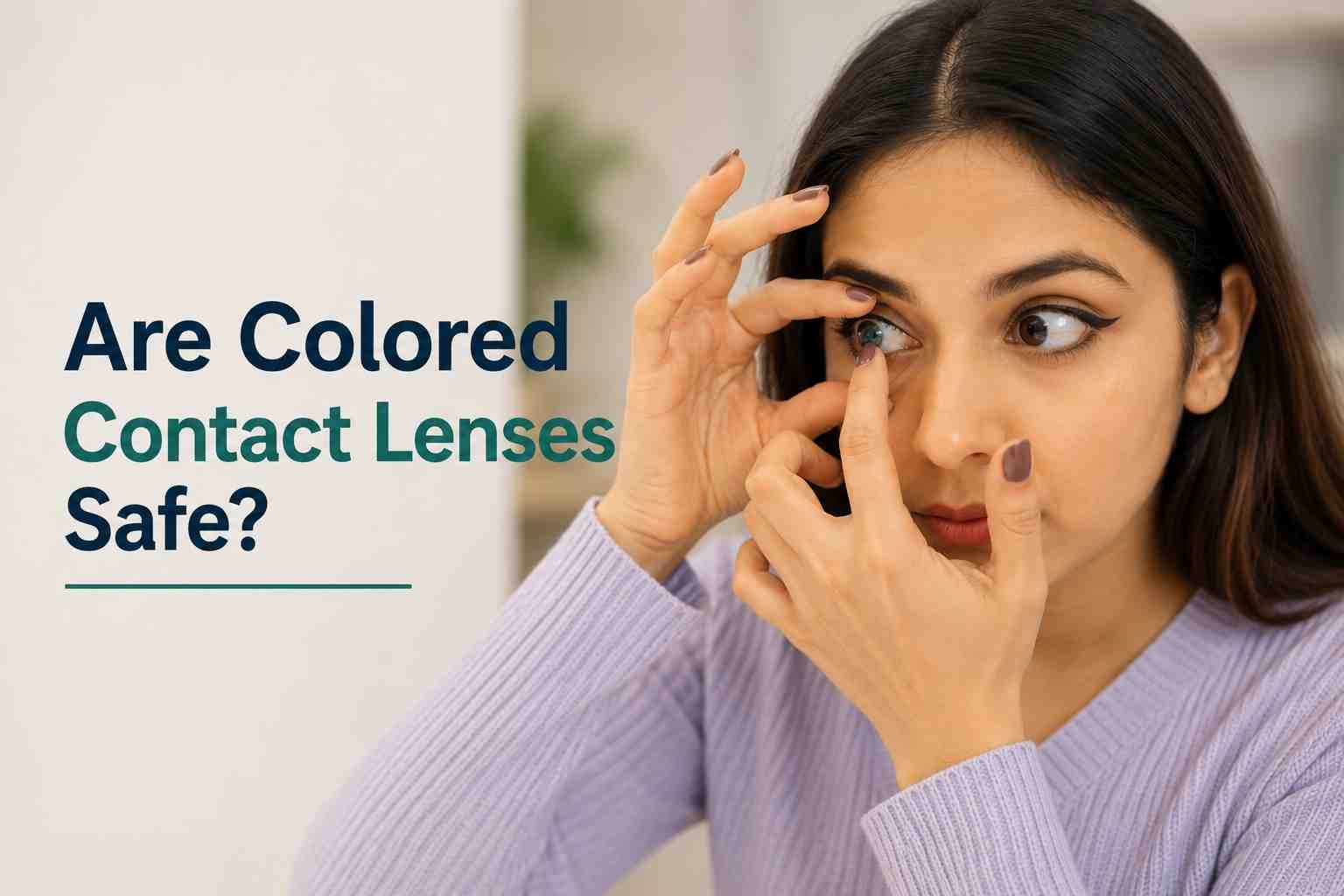
A change in eye colour should never come at the cost of eye health. A colored contact lens can alter the appearance of your eyes and may be used for cosmetic or vision-correction purposes. However, contact lenses sit directly on the eye, so improper use, poor hygiene or wearing lenses that are not suitable for your eyes can increase the risk of irritation and infection. Understanding how to use cosmetic lenses safely is essential for protecting the cornea and maintaining healthy vision.
What Are Colored Contact Lenses?
A colored contact lens is designed to change or enhance the apparent colour of the eyes. Some lenses are prescription lenses that also correct vision, while others are purely cosmetic.
Regardless of their purpose, coloured lenses require the same level of care and attention as corrective contact lenses. They are medical devices that come into direct contact with the surface of the eye.
Using a colored contact lens without proper fitting or appropriate guidance may increase the risk of discomfort, corneal scratches and infections.
Are Colored Contact Lenses Safe for Everyone?
When properly prescribed, fitted and used according to professional instructions, coloured contact lenses can be suitable for many people. However, they are not automatically safe simply because they are sold as cosmetic products.
The fit of a lens matters. A lens that is too tight, too loose or otherwise unsuitable may interfere with the normal movement of tears across the cornea.
Before wearing a colored contact lens, it is sensible to have your eyes assessed, particularly if you have never worn contact lenses before or have previously experienced eye problems.
Why Poor Lens Hygiene Can Be Dangerous
Contact lenses can collect microorganisms, deposits, and other contaminants when they are not cleaned and stored correctly. If contaminated lenses are placed back onto the eye, bacteria or other organisms may come into contact with the cornea.
This can potentially result in microbial keratitis, a serious corneal infection that may threaten vision if not treated promptly.
Using another person’s colored contact lens is also unsafe. Even if the lens looks clean, sharing lenses can transfer microorganisms and increase the risk of infection.
Never Sleep in Lenses Unless Specifically Advised
Sleeping while wearing contact lenses can reduce the amount of oxygen reaching the cornea and may increase the risk of certain complications.
This is particularly important with cosmetic lenses because people may be tempted to wear them for extended periods during parties, celebrations, or events.
Unless your eye care professional has specifically advised that your particular lenses can be worn overnight, remove your colored contact lenses before sleeping.
Follow the Recommended Wearing Schedule
Wearing contact lenses for longer than recommended can contribute to discomfort and increase the likelihood of complications.
If your eyes begin feeling dry, irritated, or painful while wearing lenses, remove them rather than trying to tolerate the discomfort.
The recommended wearing time can vary depending on the lens type and individual circumstances. Follow the instructions provided by your eye care professional and the lens manufacturer.
If you experience repeated problems with a colored contact lens, an examination by an eye specialist in Vadodara can help determine whether the issue relates to the lens, its fit, or another eye condition.
How to Clean and Store Contact Lenses Properly
Proper cleaning and storage are essential parts of contact lens care. Use the recommended contact lens solution and follow the instructions provided for your specific lenses.
Avoid using tap water to clean or store lenses. Water can contain microorganisms that may cause serious eye infections.
The lens case also requires attention. It should be cleaned and replaced according to professional recommendations.
Good hygiene practices can significantly reduce avoidable risks associated with wearing a colored contact lens.
Never Use Someone Else’s Lenses
Sharing contact lenses is not safe, even between friends or family members. Contact lenses are fitted according to individual eye characteristics, and sharing them can also introduce microorganisms from another person’s eyes.
Cosmetic lenses should be treated with the same caution as prescription lenses.
If you want to try a colored contact lens, seek professional guidance rather than borrowing one from someone else or purchasing an unsuitable lens without an eye examination.
What Symptoms Should Make You Remove Your Lenses?
Certain symptoms should never be ignored while wearing contact lenses.
Remove the lenses and seek professional advice if you experience:
- Eye pain
- Significant redness
- Increasing sensitivity to light
- Sudden blurred vision
- Unusual discharge
- Persistent irritation
- Excessive watering
- A feeling that something is stuck in the eye
Do not simply replace the lens and continue wearing it if symptoms persist.
An eye specialist in Vadodara can examine the cornea and determine whether there is an infection, injury or another problem requiring treatment.
Eye Safety Tips for Contact Lens Wearers
Following practical eye safety tips for contact lens wearers can help reduce avoidable risks associated with cosmetic and corrective lenses.
Always wash and dry your hands before handling lenses. Follow the recommended replacement schedule and use only the appropriate lens solution. Avoid wearing lenses while swimming unless you have been given specific professional advice about suitable protection.
It is also important to attend regular eye examinations, especially if you wear contact lenses frequently.
These precautions may seem simple, but consistent habits can make a significant difference to contact lens safety.
Why Professional Fitting Matters
A contact lens is not simply a coloured accessory. It sits directly on the cornea, so its size, shape and fit need to be appropriate for your eyes.
Professional fitting can help identify whether lenses are suitable and whether your eyes remain healthy while wearing them.
If you are looking for trusted eye specialists in Vadodara, choose professionals who can assess your eyes, explain appropriate lens care and identify potential problems early.
This is particularly important if you experience repeated dryness, redness or discomfort while wearing contact lenses.
Can Colored Lenses Cause Corneal Infections?
A colored contact lens does not automatically cause an infection. The risk increases when lenses are poorly fitted, contaminated, worn for too long or handled without proper hygiene.
Corneal infections can sometimes progress quickly. Severe keratitis may cause significant pain, light sensitivity, blurred vision or other symptoms and can potentially affect sight.
Prompt medical attention is therefore important if an infection is suspected. Do not attempt to treat serious symptoms by simply stopping lens use and waiting for them to disappear.
Choosing Lenses Responsibly
If you are considering cosmetic lenses, avoid purchasing products from unreliable sources where the lens material, hygiene standards, fitting or safety information may be uncertain.
Professional guidance can help you understand whether a particular colored contact lens is suitable for your eyes and how it should be used.
This approach can help reduce the risk of preventable complications while allowing you to enjoy cosmetic lenses more safely.
When to Seek an Eye Examination
Even if you currently have no symptoms, an eye examination can be valuable before starting contact lens use. It can help determine whether your eyes are suitable for lenses and provide guidance on fitting and care.
If you already wear lenses and notice recurring discomfort, redness or blurred vision, do not ignore these changes.
An eye specialist in Vadodara can assess your eye health and help determine whether contact lenses remain appropriate for you.
For ongoing contact lens users, regular care from trusted eye specialists in Vadodara can also help identify problems before they become more serious.
Conclusion
A colored contact lens can be a safe option for some people when it is properly fitted, obtained from a reliable source and used according to professional instructions. However, poor hygiene, extended wear, sleeping in lenses and sharing lenses can increase the risk of serious corneal complications.
At Desai Eye Hospitals, patients can receive professional eye examinations and guidance on contact lens suitability, fitting and safe usage. If you experience pain, redness, discharge or sudden changes in vision while wearing contact lenses, seek professional evaluation promptly.
Considering coloured contact lenses or experiencing discomfort while wearing them? Contact Desai Eye Hospitals today to schedule an eye examination and get professional guidance for safe contact lens use.