

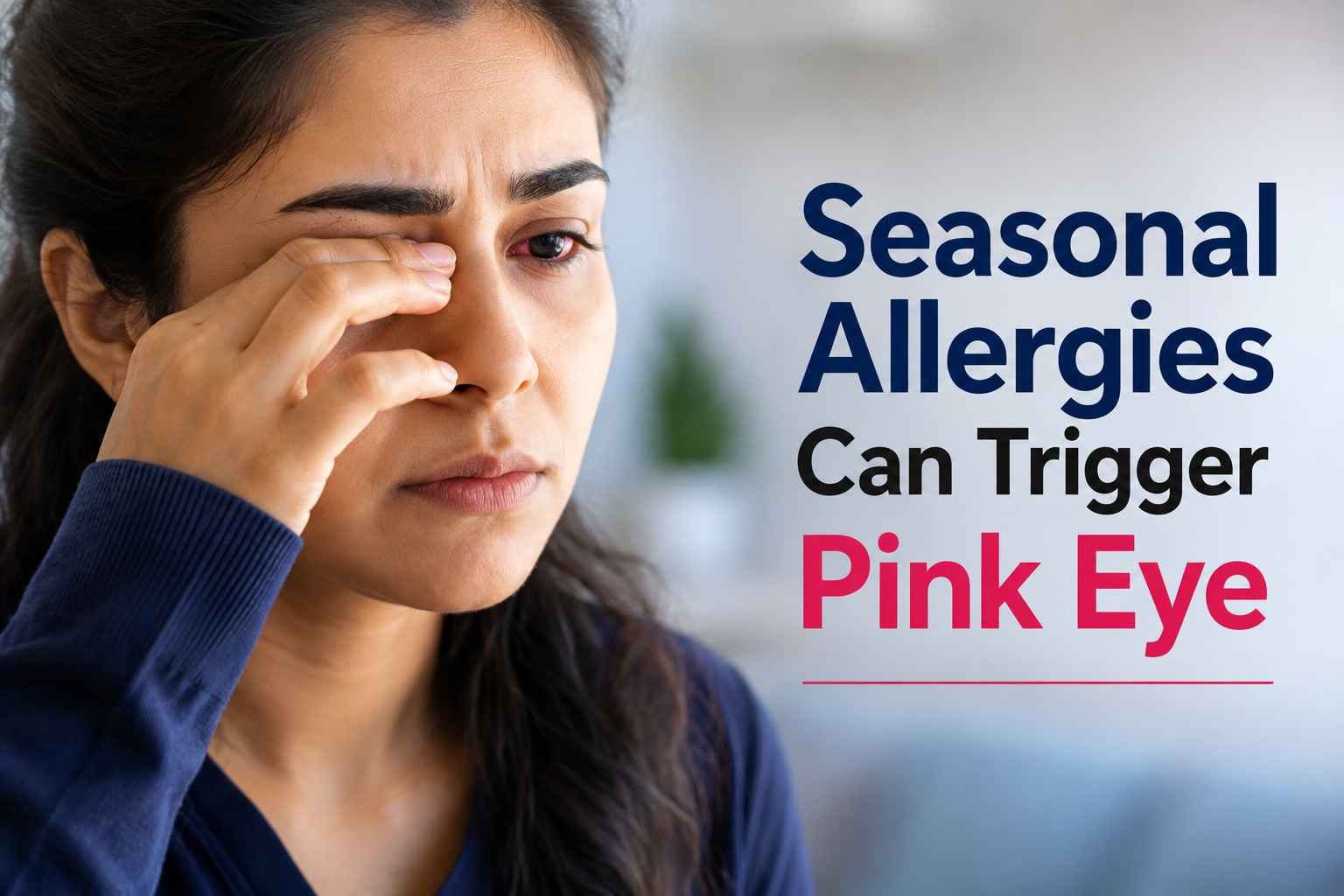
When the seasons change, your eyes may be the first to notice. Seasonal allergies can bring sneezing, a runny nose, itchy skin, and watery eyes. For some people, however, allergy season can also cause noticeable redness and irritation in the eyes. This reaction is commonly referred to as pink eye, although not every red or irritated eye is caused by an infection.
Understanding the difference between allergy-related conjunctivitis and infectious conjunctivitis is important because the causes, symptoms, and appropriate treatments can be very different. Knowing what to look for can help you respond appropriately and understand when professional eye care is necessary.
What Causes Pink Eye During Allergy Season?
Seasonal allergic conjunctivitis occurs when the eyes react to allergens such as pollen, grass, weeds, dust, or other environmental substances. When an allergic person encounters a trigger, the immune system releases chemicals such as histamine, which can cause inflammation of the conjunctiva, the thin membrane covering the white part of the eye and the inside of the eyelids.
This inflammation can result in redness, itching, watering, and swelling. Unlike infectious conjunctivitis, allergy-related pink eye is not caused by bacteria or viruses and is not contagious.
People who already experience seasonal allergies may notice that their eye symptoms become worse during periods when pollen levels are high.
Common Symptoms of Allergy-Related Pink Eye
The symptoms of allergic pink eye can be uncomfortable, but they often have some distinguishing characteristics. Itching is one of the strongest clues that allergies may be involved.
Common symptoms include:
- Intense itching in one or both eyes
- Redness of the whites of the eyes
- Excessive watering
- Puffy or swollen eyelids
- Burning or irritation
- Sensitivity to environmental triggers
- Symptoms occurring alongside sneezing or a runny nose
Allergy-related symptoms often affect both eyes, although the severity may differ between them. Rubbing the eyes can make the irritation and swelling worse.
How Infectious Pink Eye Is Different
Infectious conjunctivitis can be caused by viruses or bacteria. Because the underlying cause is different, the symptoms may also appear differently from those associated with allergies.
Viral conjunctivitis may begin in one eye and later affect the other. It can cause redness, watering, irritation, and sometimes a watery discharge. It may also occur alongside symptoms of a respiratory infection.
Bacterial conjunctivitis can produce thicker discharge, which may cause the eyelids to stick together, particularly after sleeping. Some bacterial infections can become more severe and require medical treatment.
Unlike allergic pink eye, infectious forms can spread from person to person through contaminated hands, towels, pillowcases, cosmetics, or other shared objects.
Itching or Discharge: Which Symptom Matters More?
One useful way to distinguish allergy-related pink eye from infection is to consider the dominant symptoms.
Prominent itching tends to suggest an allergic reaction, particularly when both eyes are affected, and the person also has other seasonal allergy symptoms.
Thick or sticky discharge may be more suggestive of bacterial infection, especially when the eyelids become difficult to open after sleep.
Watery eyes and redness can occur with both allergies and viral infections, so these symptoms alone cannot establish the cause.
Because symptoms can overlap, it is not always possible to determine the cause without professional assessment.
Can Allergy-Related Pink Eye Spread to Other People?
Allergic pink eye itself is not contagious because it is an immune response to an allergen rather than an infection.
However, it is important not to assume that every case of red eye is allergy-related. Viral and bacterial conjunctivitis can spread easily, particularly in schools, workplaces, households, and other environments where people are in close contact.
If you are uncertain about the cause, avoid sharing towels, pillows, cosmetics, or eye products until the condition has been properly assessed.
What Can Trigger Seasonal Eye Allergies?
Different people can react to different allergens. Seasonal triggers commonly include pollen from trees, grasses, and weeds. Environmental pollution and dust can also aggravate symptoms in some individuals.
If you repeatedly develop pink eye symptoms at particular times of the year, keeping track of when the symptoms appear can be useful. You may begin to identify a connection between particular seasons or environments and your eye irritation.
Reducing exposure to known triggers can sometimes help minimize symptoms.
Simple Ways to Reduce Allergy-Related Eye Irritation
If seasonal allergies are affecting your eyes, several practical measures may help reduce discomfort.
Avoid rubbing your eyes, as rubbing can increase inflammation and may introduce bacteria to the eye. Washing your face after spending time outdoors can also help remove allergens. Keeping windows closed during periods of high pollen exposure may be useful for particularly sensitive people.
Cold compresses can provide temporary relief from itching and swelling. Artificial tears may also help wash allergens from the surface of the eyes.
If symptoms continue or become severe, professional advice is recommended rather than repeatedly using over-the-counter products without knowing the underlying cause.
When Should You Visit an Eye Care Hospital in Vadodara?
Most mild allergy-related pink eye symptoms can be managed with appropriate precautions, but persistent or severe symptoms should not be ignored.
You should consider visiting an eye care hospital in Vadodara if the redness continues, symptoms become increasingly uncomfortable, vision becomes blurred, or you develop significant pain or sensitivity to light.
Professional evaluation is especially important when the cause is unclear. Allergic, viral, and bacterial conjunctivitis can have overlapping symptoms, and other eye conditions can also cause redness.
An eye specialist can examine the eye and determine whether the symptoms are consistent with an allergy or require further investigation.
When Does Pink Eye Need Medical Attention?
Not every case of pink eye requires the same level of treatment. Mild allergy-related symptoms may improve when exposure to the trigger is reduced, while infectious conjunctivitis may require specific care depending on its cause.
Seek professional attention if you experience:
- Significant eye pain
- Sudden changes in vision
- Strong sensitivity to light
- Severe swelling
- Symptoms that continue to worsen
- Thick or persistent discharge
- Redness that does not improve
- Symptoms following an eye injury
These signs should not simply be attributed to seasonal allergies without an appropriate examination.
Can I Exercise with Conjunctivitis?
The question can I exercise with Conjunctivitis depends on the cause and severity of the condition. If the conjunctivitis is infectious, activities involving close contact with other people may increase the risk of spreading the infection.
If your eyes are significantly irritated, watery, swollen, or sensitive to light, strenuous exercise may also make you feel less comfortable. It may be sensible to rest until symptoms improve and follow the advice of your healthcare professional.
If you do exercise, avoid touching or rubbing your eyes and wash your hands thoroughly before and after physical activity.
Getting the Right Care for Conjunctivitis
Determining the cause of pink eye is important because treatment should be based on the underlying problem. Antibiotics, for example, do not treat viral or allergic conjunctivitis, while persistent allergies may require a different approach altogether.
If you need comprehensive eye treatment in Vadodara, an eye specialist can evaluate your symptoms and recommend suitable care. This can help prevent unnecessary medication use and ensure that potentially serious symptoms are not overlooked.
Choosing an eye care hospital in Vadodara with access to professional eye examinations can also provide reassurance when you are unsure whether your symptoms are caused by allergies or infection.
Protecting Your Eyes During Allergy Season
Preventing allergy-related pink eye starts with identifying and limiting exposure to triggers where possible. Simple habits such as washing your face after being outdoors, avoiding eye rubbing, keeping personal towels separate, and maintaining good hand hygiene can help.
People who frequently experience seasonal eye allergies should also discuss recurring symptoms with an eye specialist. Identifying patterns can make it easier to manage future episodes.
Most importantly, do not assume that every episode of redness is simply an allergy. Persistent or unusual symptoms deserve professional attention.
Conclusion
Seasonal allergies can cause pink eye through an inflammatory reaction to pollen and other environmental allergens. Intense itching, watery eyes, and symptoms affecting both eyes often point towards an allergic cause, while thick discharge, spreading redness, or symptoms following exposure to an infected person may suggest an infectious form.
However, symptoms can overlap, making professional assessment important when the cause is uncertain. With the right guidance, appropriate comprehensive eye treatment in Vadodara can help manage conjunctivitis and protect your overall eye health.
At Desai Eye Hospitals, patients can receive professional evaluation and personalised care for conjunctivitis, allergies, infections, and other eye conditions. Contact us today to schedule an eye consultation and get the right care for your eye health.