

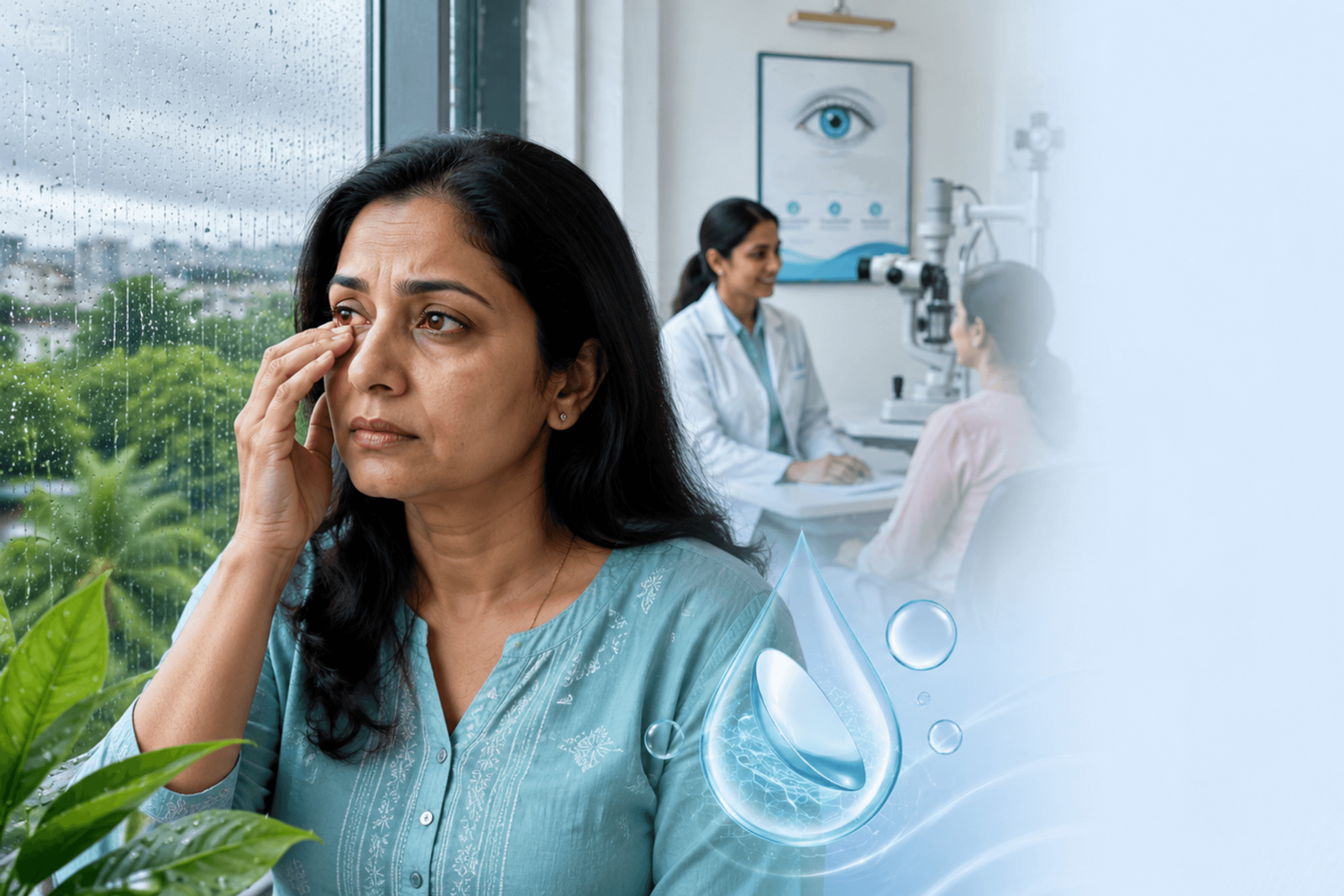
Does Humid Weather Really Help Dry Eyes? Not Always.
As June approaches and the monsoon season begins to build across India, many people assume that rising humidity will naturally relieve dry eye symptoms. After all, moisture in the air should help keep the eyes comfortable, right?
The reality is more complicated.
While humidity can reduce tear evaporation in some situations, sudden weather changes, increased allergens, indoor air conditioning, pollution, and fluctuating moisture levels can actually make dry eye disease in humid weather more challenging for many individuals.
If your eyes feel itchy, irritated, watery, or uncomfortable during the early monsoon season, understanding how humidity affects eye health can help you manage symptoms and protect your vision.
Understanding Dry Eye Disease
Dry eye disease is a common condition that occurs when your eyes do not produce enough tears or when tears evaporate too quickly. Tears play an essential role in maintaining eye comfort, clear vision, and protection against infections.
When the tear film becomes unstable, it can lead to symptoms such as:
- Burning sensation in the eyes
- Redness and irritation
- Gritty or sandy feeling
- Excessive tearing
- Blurred vision
- Eye fatigue
- Light sensitivity
Many people associate dry eyes only with winter, but seasonal dry eyes can occur throughout the year, including during the monsoon transition period.
The Connection Between Humidity and Dry Eyes
The relationship between humidity and dry eyes is often misunderstood.
In moderate conditions, humidity can help reduce tear evaporation. However, extreme or fluctuating humidity levels can create new challenges for people already suffering from dry eye disease.
Several environmental factors during June contribute to discomfort:
1. Sudden Changes in Moisture Levels
The pre-monsoon season often brings unpredictable shifts between hot, dry conditions and humid weather. These rapid changes can disrupt the tear film, causing increased eye discomfort.
People with existing dry eye disease may find it difficult for their eyes to adapt to these environmental fluctuations.
2. Increased Allergens and Airborne Irritants
Humidity encourages the growth of mold, fungi, dust mites, and other allergens. These particles can trigger inflammation on the eye surface, worsening dry eye symptoms.
Many patients mistakenly believe they have allergies alone when, in reality, both allergies and dry eye disease are contributing to their discomfort.
3. More Time Indoors
As temperatures rise before the monsoon arrives, people often spend more time in air-conditioned environments.
Air conditioning removes moisture from indoor air, which can increase tear evaporation and contribute to dry eyes in summer despite the humid conditions outside.
4. Increased Pollution and Dust
June often brings dust storms, construction-related particles, and urban pollution before regular rainfall begins.
Exposure to these irritants can cause eye irritation from humidity-related environmental changes and aggravate dry eye disease.
Common Dry Eye Symptoms During the Monsoon Transition
Many people are surprised to discover that excessive watering can actually be a sign of dry eye disease.
Watch for symptoms such as:
- Persistent redness
- Stinging or burning eyes
- Frequent blinking
- Watery eyes
- Difficulty wearing contact lenses
- Blurred vision while reading or using screens
- Eye fatigue at the end of the day
If these symptoms continue for several weeks, professional evaluation is recommended.
Why Screen Time Makes the Problem Worse
One major contributor to dry eye disease today is prolonged digital device use.
When using smartphones, tablets, or computers, people blink significantly less often. Reduced blinking prevents tears from spreading evenly across the eye surface.
Combined with indoor air conditioning and fluctuating humidity levels, excessive screen time can significantly worsen dry eye symptoms.
To protect your eyes:
- Follow the 20-20-20 rule
- Blink consciously while using screens
- Adjust screen brightness
- Maintain proper viewing distance
- Take regular breaks throughout the day
Practical Monsoon Eye Care Tips for Dry Eye Patients
Following simple preventive measures can help reduce discomfort during the humid season.
Stay Hydrated
Proper hydration supports healthy tear production. Drink adequate water throughout the day, especially during hot and humid weather.
Use Lubricating Eye Drops
Artificial tears recommended by an eye specialist can help stabilize the tear film and relieve dryness.
Avoid self-medicating with over-the-counter redness-relief drops unless advised by a doctor.
Protect Your Eyes Outdoors
Wear protective sunglasses when outdoors to shield your eyes from dust, pollution, wind, and UV exposure.
Maintain Good Indoor Air Quality
If you spend significant time in air-conditioned environments:
- Avoid direct airflow toward your face
- Use a humidifier when necessary
- Take regular breaks from enclosed spaces
Practice Good Eye Hygiene
During the monsoon season, keeping the eyelids clean can help reduce inflammation and support healthy tear production.
Gentle eyelid cleaning and warm compresses may be beneficial for some individuals.
Eat Foods That Support Eye Health
Omega-3 fatty acids, leafy greens, nuts, seeds, and colorful fruits may support healthy tear function and overall eye wellness.
When Should You See an Eye Specialist?
Occasional eye irritation may not be a cause for concern, but persistent symptoms should never be ignored.
You should schedule an eye examination if you experience:
- Chronic dryness lasting several weeks
- Frequent redness
- Eye pain
- Blurred vision
- Sensitivity to light
- Difficulty performing daily activities
Early diagnosis can help prevent complications and improve long-term eye comfort.
Protect Your Eyes Before the Monsoon Arrives
The transition into monsoon season can bring unexpected challenges for people living with dry eye disease. While humidity is often thought to provide relief, fluctuating weather conditions, allergens, indoor cooling systems, and environmental irritants can still trigger significant discomfort.
Understanding the connection between dry eye disease in humid weather and seasonal environmental changes allows you to take proactive steps toward maintaining healthy, comfortable eyes.
If you are experiencing persistent dry eye symptoms or seasonal eye discomfort, the experienced team at Desai Eye Hospital offers comprehensive eye evaluations and advanced treatment options tailored to your needs. Recognized as a trusted eye hospital in Vadodara, our specialists are committed to helping patients manage dry eye disease and other vision concerns with personalized care. When looking for reliable eye hospitals in Vadodara, choosing expert guidance can make all the difference in protecting your long-term eye health.