

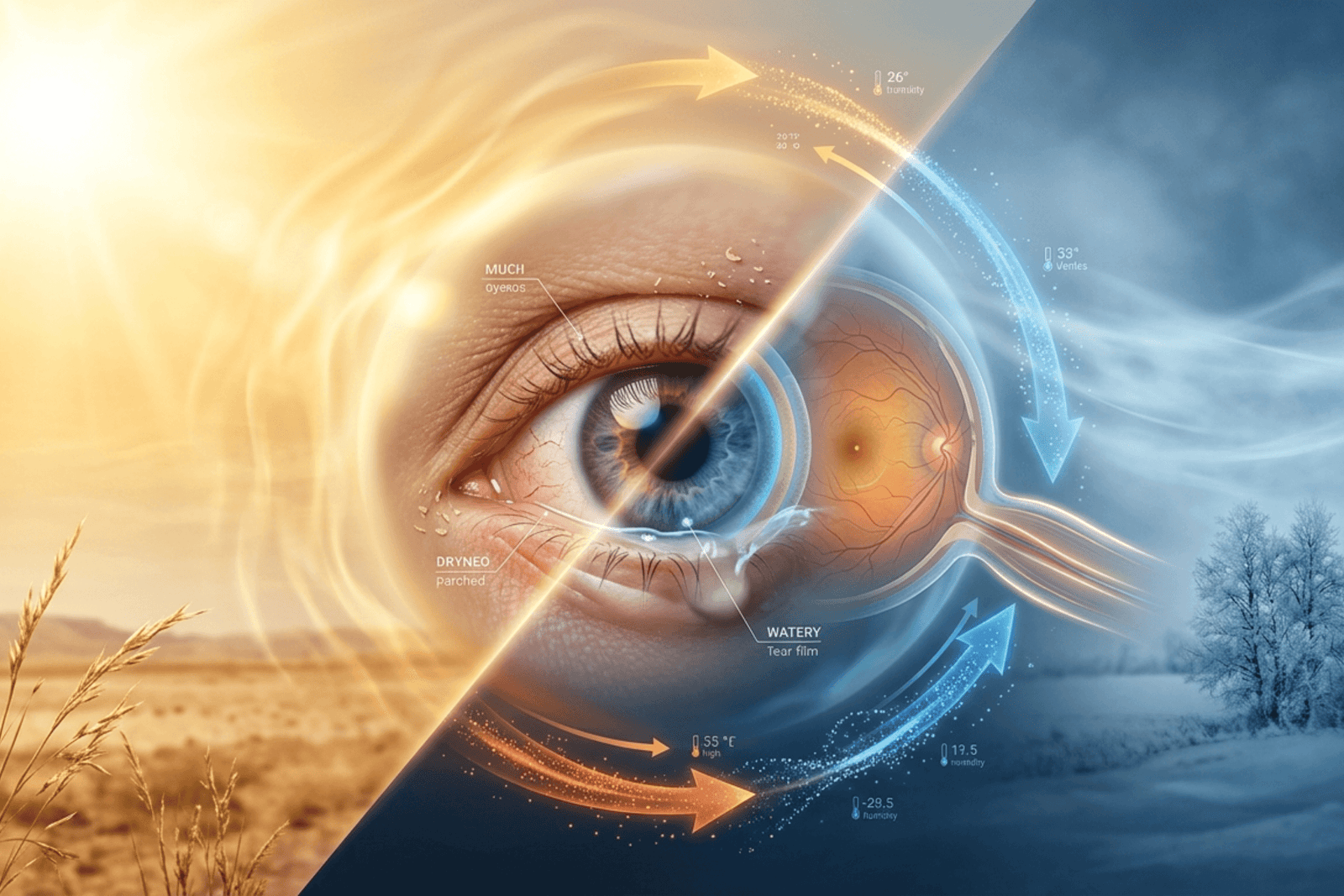
Have you ever stepped out into intense summer heat or walked into an air-conditioned room and suddenly noticed your eyes feeling dry, blurry, or irritated?
Many people ignore these changes, assuming they are temporary discomforts. However, temperature shifts can have a real impact on your eye health and vision quality.
From hot outdoor winds to cold winter air and sudden indoor cooling, your eyes constantly adjust to changing environments. In some cases, these conditions may trigger irritation, blurry vision, dryness, or even worsen existing eye conditions.
Understanding how sudden temperature changes affect vision can help you protect your eyesight before minor discomfort turns into a serious concern.
Why Temperature Changes Affect Your Eyes
Your eyes rely on a stable tear film to stay lubricated, comfortable, and clear. Extreme weather conditions can disturb this balance. Whether it is excessive heat, dry air, cold winds, or rapid shifts between indoor and outdoor temperatures, your eyes may struggle to adapt quickly.
Temperature changes and eye health are closely connected because the eyes are highly sensitive to moisture levels, humidity, and environmental stress.
Common environmental triggers include:
- Hot weather and excessive sun exposure
- Cold winds and dry winter air
- Air conditioning and indoor heating
- Dust, pollution, and smoke
- Sudden shifts between outdoor heat and indoor cooling
These factors may lead to discomfort and temporary vision disturbances.
Can Sudden Temperature Changes Affect Vision?
Yes, sudden temperature changes affect vision more often than people realize. Rapid environmental changes can impact the tear film, eye muscles, and blood vessels around the eyes. This may result in temporary blurry vision, sensitivity, irritation, or dryness.
For some individuals, especially those with pre-existing eye conditions, the symptoms can become more noticeable and uncomfortable.
Common Vision Problems From Temperature Changes
1. Blurry Vision in Hot Weather
Many people experience blurry vision in hot weather due to dehydration and dry eyes. High temperatures can increase tear evaporation, leaving the eyes less lubricated.
When the eye surface becomes dry, vision may appear hazy or unfocused. Prolonged exposure to heat can also cause eye fatigue and discomfort.
Symptoms may include:
- Temporary blurry vision
- Burning sensation
- Eye strain
- Difficulty focusing
- Increased light sensitivity
Spending long hours outdoors without eye protection can worsen these symptoms.
2. Dry Eyes From Weather Changes
One of the most common issues linked to changing temperatures is dry eyes from weather changes. Both hot and cold environments can reduce moisture in the eyes.
Air conditioning, indoor heating systems, and strong winds often make dryness worse. People who spend extended hours using screens may experience even greater discomfort because blinking reduces during screen time.
Signs of dry eyes include:
- Itching
- Redness
- Watering
- Scratchy feeling
- Tired eyes
- Blurred vision
Without proper care, chronic dryness may affect daily comfort and productivity.
3. Cold Weather Eye Problems
Cold-weather eye problems are especially common during winter months or in windy environments. Cold air can irritate the eye surface and reduce natural lubrication.
In winter, humidity levels also drop significantly, increasing dryness and sensitivity.
People may experience:
- Excessive tearing
- Redness
- Eye irritation
- Increased sensitivity to wind
- Difficulty wearing contact lenses
Cold weather can also worsen conditions like blepharitis and dry eye syndrome.
4. Eye Irritation From Heat and Cold
Frequent transitions between heat and cold can create stress on the eyes. For example, moving from outdoor heat into heavily air-conditioned spaces may cause discomfort and irritation.
Eye irritation from heat and cold often results from rapid moisture loss and environmental stress.
This may lead to:
- Watery eyes
- Burning sensation
- Puffy eyelids
- Eye fatigue
- Mild headaches caused by eye strain
Who Is More Sensitive to Temperature-Related Eye Problems?
Certain individuals are more likely to experience vision problems from temperature changes.
This includes:
- Older adults
- People with dry eye syndrome
- Contact lens users
- Individuals with allergies
- People with glaucoma or other eye diseases
- Those who spend long hours on screens
- Outdoor workers are exposed to the sun and wind
If you already have an eye condition, sudden weather changes may make symptoms more noticeable.
How to Protect Your Eyes During Weather Changes
Taking simple preventive measures can help reduce discomfort and maintain healthy vision throughout the year.
- Stay Hydrated
Dehydration directly affects tear production. Drinking enough water helps maintain moisture levels in the eyes.
- Wear Protective Eyewear
Sunglasses can shield your eyes from UV rays, hot winds, dust, and pollution. During winter, protective glasses can reduce exposure to cold winds.
- Use Artificial Tears
Lubricating eye drops may help relieve dryness caused by heat, air conditioning, or cold weather.
- Limit Direct Air Exposure
Avoid sitting directly under fans, heaters, or air conditioning vents, as constant airflow can dry out the eyes.
- Follow the 20-20-20 Rule
If you work on screens for long hours, take regular breaks to reduce strain and dryness. Every 20 minutes, look at something 20 feet away for 20 seconds.
- Maintain Indoor Humidity
Using a humidifier during winter or in dry indoor environments can help prevent excessive eye dryness.
When Should You See an Eye Specialist?
While occasional irritation may not be serious, persistent symptoms should never be ignored. You should consult an eye specialist if you experience:
- Frequent blurry vision
- Severe dryness or irritation
- Persistent redness
- Eye pain
- Light sensitivity
- Headaches linked to eye strain
- Sudden vision changes
Early diagnosis can help prevent complications and improve overall eye comfort.
Caring for Your Eyes in Every Season
Your eyes constantly respond to the environment around you. Whether it is summer heat, cold winds, or sudden indoor cooling, these conditions can affect how comfortably and clearly you see.
Understanding how sudden temperature changes affect vision allows you to take better care of your eyes before symptoms worsen. Simple habits like staying hydrated, protecting your eyes outdoors, and seeking timely medical attention can make a significant difference in long-term eye health.
If you are experiencing ongoing blurry vision, dryness, or eye irritation from heat and cold, consulting an experienced eye care professional is the best step forward.
Desai Eye Hospital, our experienced team of trusted eye specialists in Vadodara, provides advanced diagnosis and personalized care for a wide range of eye conditions. Whether you are dealing with dry eyes, vision discomfort, or seasonal eye problems, we are committed to offering the best eye treatment in Vadodara with compassionate and modern care. If you are looking for an experienced Eye specialist in Vadodara or a reliable Eye Hospital in Vadodara, our team is here to help you protect your vision in every season.